Paper
Black tights, fixed gear bikes and ‘bout to explode thighs!
For the majority of the bikers, a bike is... just a bike. But for others, it is a statement of individuality, a form of self-expression.
Published date
Courses
Language, Culture and Globalization
Copyright
This work is licensed under a Creative Commons Attribution-NonCommercial 4.0 International License.
Read time
10 minutes

On this page
- Just a bike.. or more than this?
- A deeply-rooted, strictly oriental affair https://www.facebook.com/KEIRIN.MAGAZINE/ @KeirinMagazine
- Purchasing it means buying those features of personality that are contained, buying an identity, and when you ride it you express that identity.
- "A suicidal response to urban conditioning"
- Fairly enough, as only Caribbean immigrants were the ones accustomed with that trend!
- Aesthetics and criticism
- The need to keep the right pace
- References
Cyclists' communities, wether officially or unofficially established, are surrounded by criticism usually accompanied with equivalent vitriolic attacks or complimentary comments. At the dawning of the new decade the reemergence of what can not be described as a new phenomenon - but surely the scope of its manifestation is a new one - made cyclists expand not only their vocabulary with a bunch of new 'adjectives' but also their cultural horizons. This is fixed gear-bike culture.
Back to topJust a bike.. or more than this?
Bikes are considered to be one of mankind’s most important inventions that rapidly evolved during the last century. For the majority who still prefer to sit on a leather seat of a hybrid pushing its horn during heavy rush hour a bike is... just a bike. But for those who take the risk to strike a pedal and cut through the unbearable New York, London or Tokyo traffic, a bike that follows minimalistic principles is something more. It is a statement of individuality, a form of self-expression and self-representation that progressively morphs into a complex 'life project'.
A 'life project' in which the individual perceives him/herself as a 'demigod' overcoming human physical limits, denying and resisting at the same time to comply to a world that accepts conformity as its main principle, preferring to be part of what is unanimously perceived as a margin. Every aspect of it, from the very big to the very small, requires elaborate 'ordering' work, adjustment, change and transformation with the aim to obtain the indexical 'projections' that will trigger recognizable identity features that will ensure his/her ratification by others.
Surely Henri Desgranges, the founder of the infamous Tour de France, did not have this in his mind when he encouraged ambitious competitors of 1907 to race on fixed-gear and not on derailleur-gears bikes. He would no doubt be ecstatic to know that his words served as a keystone of what has turned nowadays into a thriving global phenomenon.
During the last century, fixed gear bikes were spread world-wide, variously influenced diverse communities of "outsiders" and created eccentric identities which individuals dexterously used to mythologize themselves. They served not only as alternative means of cheap commuting and fast messengering as most people may think but also as sources and stimuli of fashion and odd trends. Historicizing them, many would be impressed to learn that they have even served as a foundation of financial development of a country seeking ways to recover from a disastrous war. Gradually a global fixed gear culture came intro being.
A deeply-rooted, strictly oriental affair https://www.facebook.com/KEIRIN.MAGAZINE/ @KeirinMagazine
Long before these bikes became fitment for huge numbers of teenagers in Western neighborhoods, they got their gladiatorial look in Japan. However, the story, dating back to 1948, is not a happy one. The Japanese government, in its strenuous effort to overcome the devastating consequences of WW 2 and reconstruct the country’s economy, conceived a particularly helpful idea. Taking advantage of the Japanese love of gambling, the authorities gave them the opportunity to bet on professional riders competing in open velodrome races. Keirin (“racing wheels” in Japanese), initially an exclusively national phenomenon, almost a tradition, but nowadays an Olympic sport, flourished.
But Japan, wanting to avoid global stigmatization, soon cared about accompanying Keirin with the equivalent institutions that would guarantee its regulated conduct. Therefore, in 1968 in Shizuoka, under the shadow of Mount Fuji, a Keirin school was established with the aim to shape conscientious and disciplined riders and to protect the sport from the involvement of Japan’s notorious mafia, Yakuza, which could potentially cause race-fixing scandals.
The school is anything but mundane to be approached through the anthropological prism. The argument behind it is that for the thousands of native but also international athletes who spend months enclosed in it, this place serves as a platform of reconfiguration of their own lives and for recomposition of their own mythologies. Imagination, being an intangible asset that can be variously triggered, interestingly starts a dialogue with different cultural backgrounds resulting thus to a vast plurality of imagined selves and worlds, making this half villain's lair, half Communist military installation an interesting culturescape.
From 50 years old ex-firemen and ex-office workers seeking to earn some good extra money, to formidable and prominent Olympic cyclists seeking an international reputation, the existing motives are extremely contradictory. Whilst co-existing, thus, cultural boundaries and localities are becoming latent, making deterritorialization their only common characteristic. Imagination, blending with the inexhaustible flows of knowledge and information provided by the mass media, fosters the conceptualization of rich, ever-changing bundles of possible lives.
Westerners, thus, being attracted by the Far Eastern culture, present themselves as fierce samurais embodying the ideals of an old illustrious Japan. Native Japanese, on the other hand, seeking to analogize themselves to a perfectly physically and mentally shaped Olympian, try to uncover every nutritional secret that may enhance their performances. These interactions are anything but unfruitful as people that are part of specific microhegemonies reproduce their identities in interaction with others coming from totally different ones, creating thus new contexts which cast the foundations for other microhegemonies.
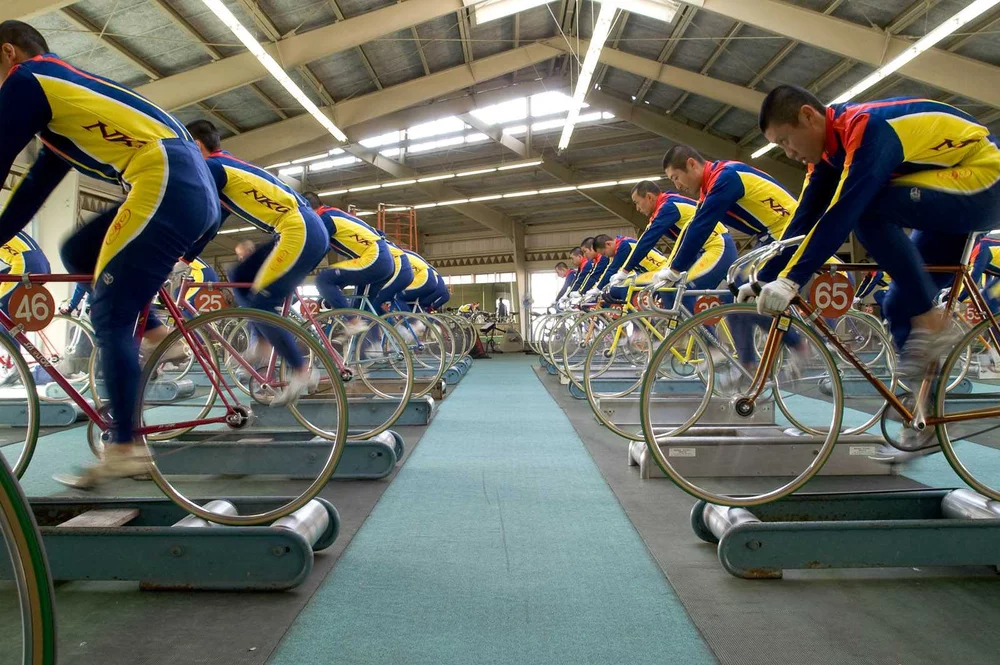
But the sprint stars who participate in Japanese Keirin with the ambition to win large amounts of prize money are not building their imaginary selves based just on a plethora of images of intertermporal role-models. Considering that if not for the bikes, there would be no scene at all, 'backstage actors' (i.e. the tireless, intensely focused mechanics who meticulously and passionately work day and night to build frames that enable riders’ power to be converted fully into propelling force), are the ones that serve as the latent impellers of the individuals' imagination.
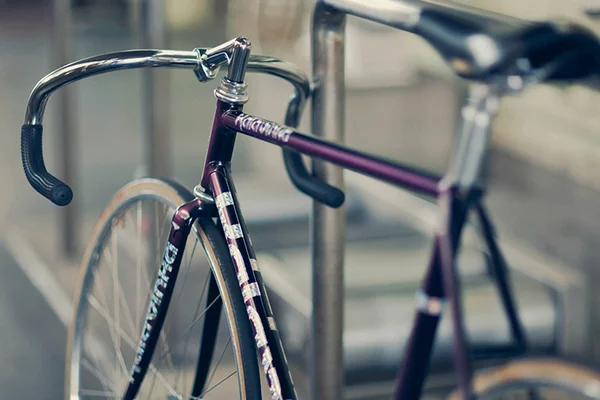
These neat artisanal artifacts clearly constitute excentric cultural material, and over the last few years, as Japanese Keirin opened its doors to the West, the elegance and uniqueness of these handmade track bike frames has attracted the interest of hundreds of riders overseas, turning them into global export commodities. This happens mainly due to minuscule deviations, the characteristics of their own uniqueness, that come in contrast with the standards of the western bike industry and culture. Thus, purchasing a Japanese bike can not be a purchase of just a functional object. It becomes a purchase of a mythologized object, one that has been given shape and value by a honourable "sensei". It is loaded with intricate sets of personality features and therefore it bespeaks a vision, a set of ideals, a particular attitude in life.
Back to topPurchasing it means buying those features of personality that are contained, buying an identity, and when you ride it you express that identity.
Thus, by owing a Nagasawa or Kalavinka bike frame, an individual does not just own a bike but also the identity enblem that comes with it, which offers him/her a high degree of recognizability, especially from within the micro-hegemonies that constitute cyclists' communities. This happens due to the fact that anyone can easily become a “fixie” just by riding a brakeless one-gear bike, but riding a NJS (stands for Japanese Keirin Association) approved bike-frame is a not just an indicator of personality but also of a financial background that allows one to spend some thousands on importing one. So, in this case an individual does not just buys a bike, but also the 'adjectives' that come with it.
"A suicidal response to urban conditioning"
- Lodovico Pignatti Morano, cycling culture guru
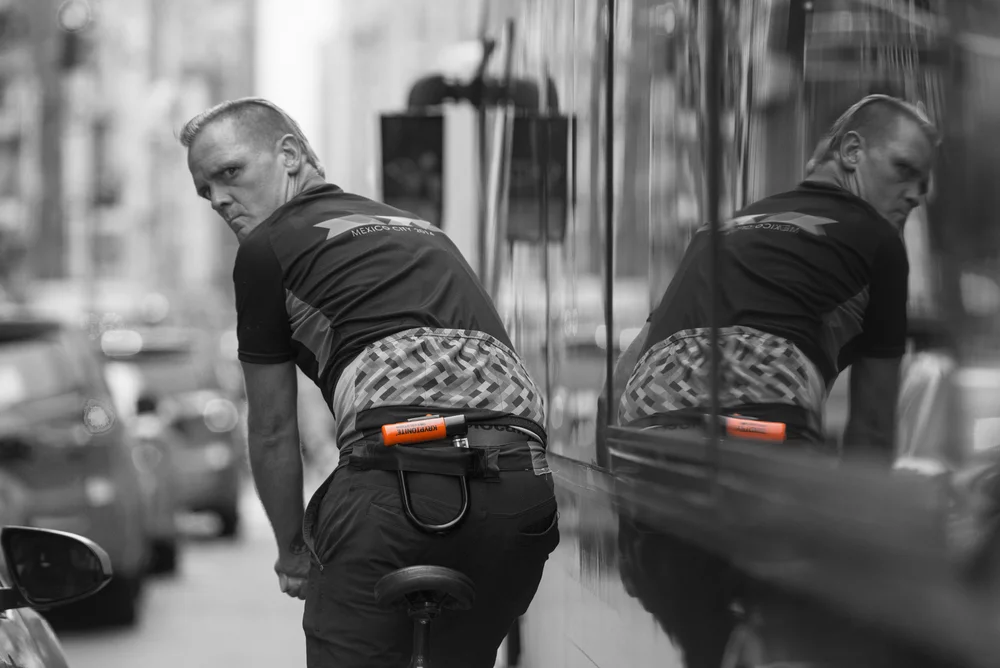
It was in early 1970s when this thoroughbred machine made its appearance in the streets of New York. Back then the presence of a track bike on the public road was something absolutely extravagant for the locals' perceptions of cycling.
Back to topFairly enough, as only Caribbean immigrants were the ones accustomed with that trend!
Caribbean immigrants were those who introduced and pioneered fixed-gear riding in the U.S., bringing their bikes with them to New York from their islands. For them, bike messengering was the main source of income.
Jamaicans and Trinidadians in their majority, these riders displayed and embodied a strong sense of group membership. One that was not replacing their traditional "thick" identities such as nationality, gender, social class, ethnicity and so forth, but one that was complementing or, in some circumstances , even accentuating and intensifying these "thick" community identities. Coming from what was seen as a peripherial zone of the world,, they were taking pride in having an edge over the locals dabbling in messengering. After all, they grew up racing bikes to impress local girls back in their homeland. This shared pride of being at the same time a newcomer and the fastest man on the block, as an aspect of their individual life projects, became the matrix of many diverse 'light groups' of fixed-gear cyclists who were proudly bringing the identity of 'messengers'. Living in a city that is perpetually moving and where there always something in demand, their hobby soon became a career, allowing them to boast the status of elevated 'professionals'.
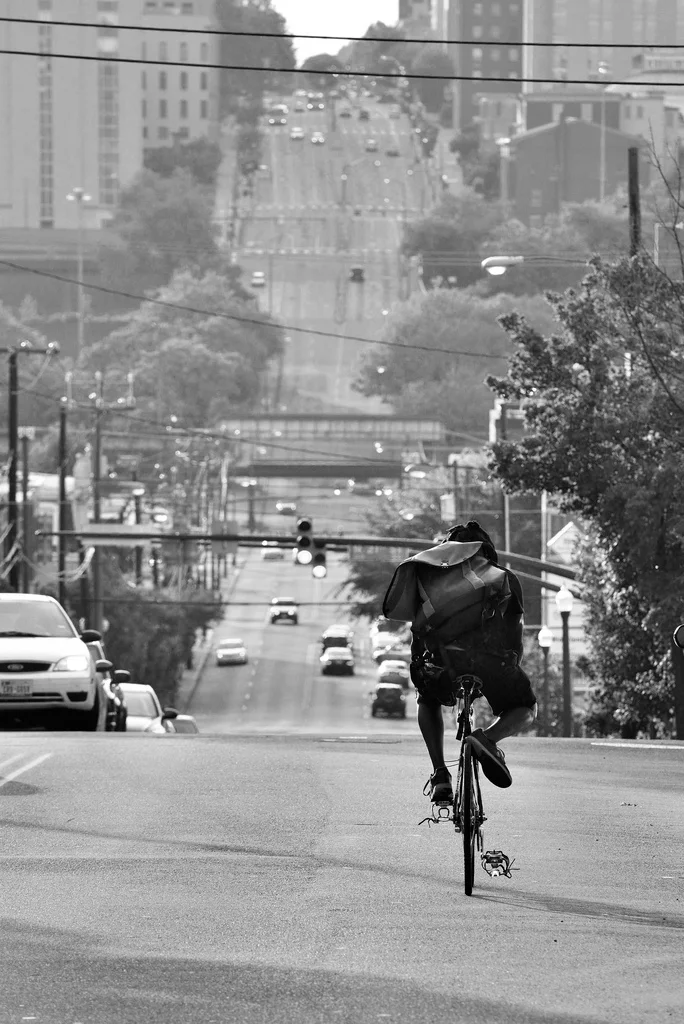
During the last decade many other similar 'light' groups emerged and shaped the US urban cycling scene. Zealots who grasped the potential that cities offer, share a common demeanor which basically, along with intense pedaling, consists of neglecting red traffic lights, passing by intersections without making sure that SUVs or buses are not coming straight into them and shouting or clapping their hands to deliver a sharp warning to hapless pedestrians. For them, these are signs of freedom, disobedience and nonconformity; they are signs of insanity, recklessness and irresponsibility for their critics. Perceived as troublesome anarchist punks who happen to ride bikes, they are occasionally insulted, but they are also the subject of curiosity and interest as they achieved to put their own piece to the mosaic constituing the identity of fixed-gear bike culture in the U.S.
Aesthetics and criticism
The rules that define fixed-gear bike culture in the Old World seem to differ a lot from the ones of the New World. In European cities, especially in the Northern ones which are often touted as cyclists' paradises, cycling is widespread. The rhythm of urban landscapes had been a determining factor for the degree of acceptance of the cycling culture and its aficionados, each one embracing a totally different 'repertoire', that keenly embraced it. From elegantly decorated cycle cafes to the latest fashion boutiques, the track bike gained a different identity in Europe, setting the starting point for multiple discourses on what everyone pursues nowadays: authenticity.
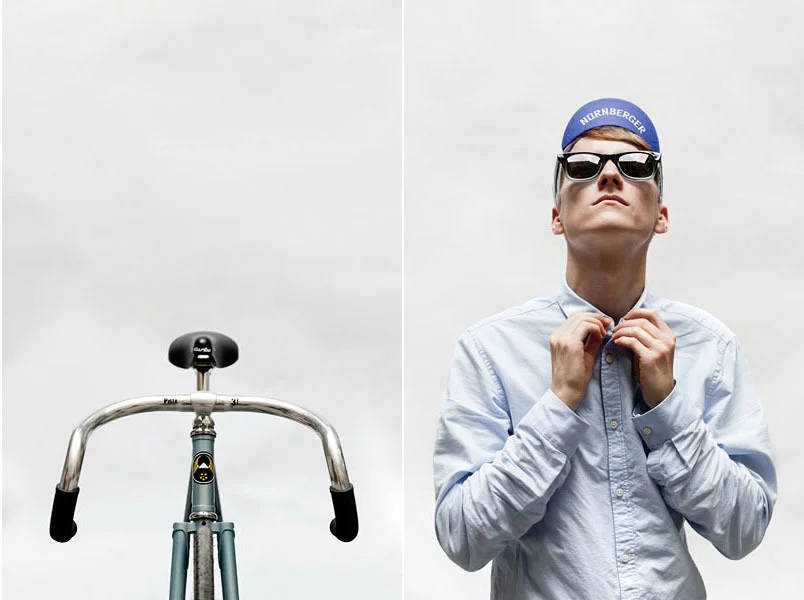
Many may expect that most of the fixie owners in European cities are skinny-jean design students and inked-up tech kids. However, this is far from true as superdiversity is the characteristic of European fixed-gear bike culture. Prominent directors, architects, elegantly suited-up lawyers, adventuresome retirees, pleasant men and women of all sorts, some of them pierced and tattooed while others not, constitute an uncommonly inclusive community overtly dismissing the culture of big capital. The superdiversity that characterizes them is also manifested through their bikes, as one can meet from modest home-built and fluorescent factory fixies to bohemian fixies displayed on apartment walls.
The scene, comprising members that are coming from various backgrounds and ages, is convivial. Nevertheless, as always happens with anything that rises from the underground, bittersweet feelings are constantly expressed by its acolytes. The vivid enthusiasm of newcomers riding with Ray-Bans and several days of stubble beneath a close-shaved head, being worshipers of 'vintage' aesthetics and expressing a yearning for an era of French 'insousiance', clashes fiercely with the exasperation of the old messengers who are nostalgic for the time that the beauty of track bikes still was a secret shared by a close circle of initiates.
This perpetual conflict that characterizes identity practices and creates stratified distinctions between 'experts' and 'novices', 'teachers' and 'learners', 'wannabes' and 'fakes' and 'degrees' of authenticity, is responsible for the application of the benchmark of 'enoughness'. According to it one has to 'have' enough of the emblematic features and to fill specific criteria in order to be ratified as an authentic member of an identity category.
However, "enoughness" is a slippery terrain for presumptive members because 'enough' is manifestly a judgment, often a compromise, and rarely a black and white well-defined set of criteria. Being "enough" but not "too much" of a fixie requires the capacity to make adequate judgement calls, to encounter what is defined as authentic and to acquire a bundle of features that will help an individual promote his/her identity mostly as a heritage and not that much as a creation. After all, the trend is considered an "old school" one, even more a ' hardcore' one. To put it into simple words: make the right judgements, 'cause tarring and feathering is always at the corner!
The need to keep the right pace
The fixed-gear bike, through its long global journey, may well constitute an artifact in which subculture and elite, rhapsody and aversion, embracement and excoriation can be blended. What makes this global phenomenon interesting is the fact that all these terms represent the two extremes of the same line. Through disparate eras the person shaped the bike and the bike in its turn offered the person a multiplicity of identities to shape him/herself.
Hence, apprentices who made the right judgments on "enoughness" rose to higher, more authoritative ranks, baptized as "fully authentic", and started building their own restricted versions.
However, in the era of globalization that we live in, the imperative need for re-identification makes even self-proclaimed 'hardcore' members to rethink about the accuracy of their statements, because the configurations of features are perpetually changing, and one's fluency of yesterday does not guarantee the same degree of fluency tomorrow. Therefore, the need to constantly satisfy the rules of recognizability is inextricably connected with the shaping of the 'life project' of an individual whether he is confined in a velodrome somewhere in Japan or cruising the streets of Europe or the dense traffic of urban US.
References
Appadurai, A. (1996). Modernity at large : Cultural dimensions of globalization (Public worlds, v. 1). Minneapolis, Minn.: University of Minnesota Press.
Blommaert, J. & P. Varis (2015) Enoughness, accent and light communities: Essays on contemporary identities. Tilburg Papers in Culture Studies paper 139. https://www.tilburguniversity.edu/upload/5c7b6e63-e661-4147-a1e9-ca881ca...
Fixed: Global Fixed-Gear Bike Culture by Andrew Edwards and Max Leonard. (Published by Laurence King publishing Ltd. 2009)
FixedMag: Issue #14 (Spring 2013), Issue#15 (Summer 2013) Gallery: Inside Japanese keirin A look at the school, the races and the future of this unique 'sport' - Updated November 26, 2014
Keirin Speed Racers: Inside the high octane and lucrative world of Japan’s cycling spectacle - March 8, 2011
The New York Times. "Unstoppable" by Jocko Weyland - April 29, 2007
Sayare, S. "Fixed-Gear Bicycles are an American Fixture in Paris" by - September28, 2011
The Japan Times. "Racer-turned-mechanic makes top-grade bikes" by Hiroshi Harada - November 5, 2013