

Article
Little Monsters: The fans behind Lady Gaga
Pop artist and icon Lady Gaga has a huge fanbase who call themselves Little Monsters. These Little Monsters can be described as a social group. This article introduces them and focuses on how they function as a group in today's society.
Published date
Courses
Social groups in the digital world
Copyright
This work is licensed under a Creative Commons Attribution-NonCommercial 4.0 International License.
Read time
10 minutes

Lady Gaga has a very big fanbase, which can be considered as a social group. They call themselves Little Monsters. This article will introduce the social group Little Monsters and how this group functions in today’s society.
Back to topMother Monster and her Little Monsters
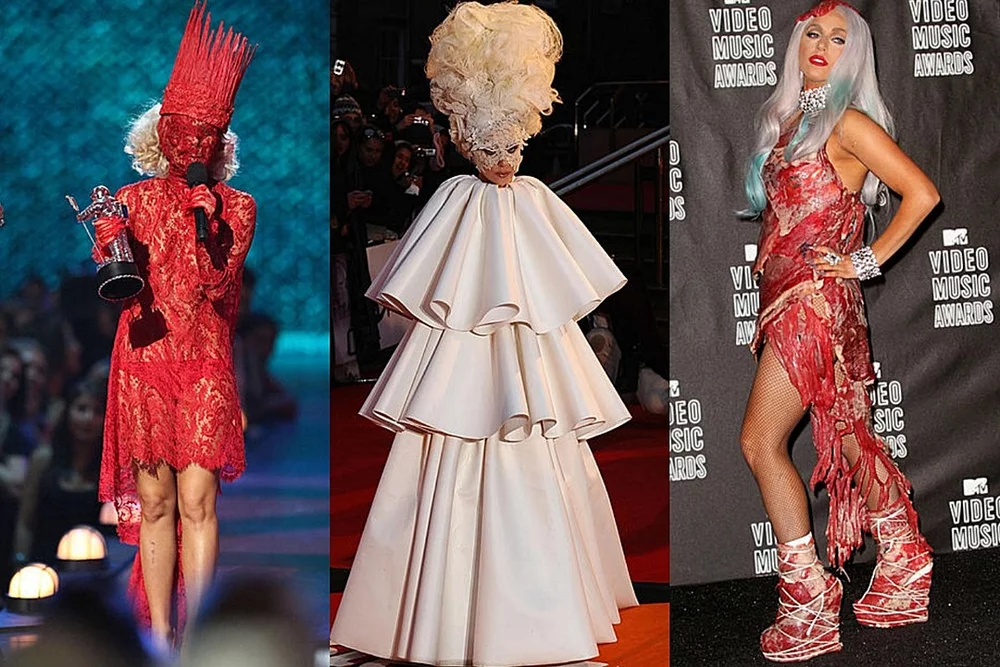
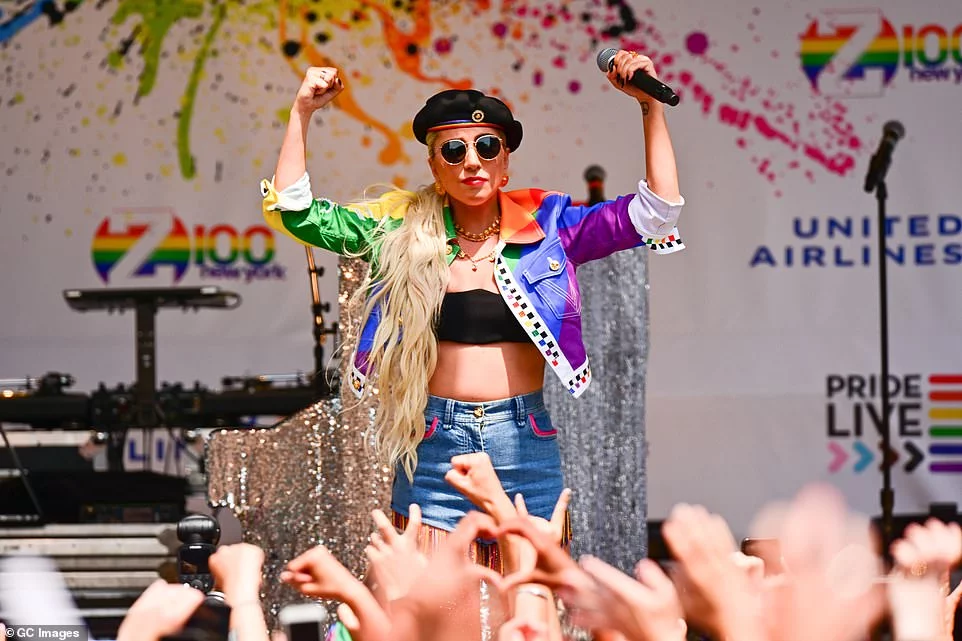
Let's start with the Mother Monster: Stefani Germanotta, mostly known as Lady Gaga is a famous American pop artist and icon. Her worldwide success started in 2009 when she launched her first album The Fame (Biography Editors, 2018). Gaga is mostly known for her unconventionality, provocative work and her extreme outfits and looks (see figure 1). Over the years she sold millions of albums, she has billions of YouTube views and countless awards.
On the other hand during her career as an artist she actively supports LGBTQ (lesbian, gay, bisexual, transgender and queer) rights worldwide. She speaks at various events and writes songs about loving yourself regardless your race, gender or sexual orientation. Additionally, Gaga launched in 2011 the Born This Way Foundation. This foundation is a non-profit organisation that aims to inspire young people to build better and safe-spaces within local communities.
While Lady Gaga was working on her second album The Fame Monster, she developed the theme of 'monster'. This theme refers to her inner fear, the 'monster' of alcohol, drugs and death. In 2009 Gaga started to use the name during her live performances to refer to her fans. From that moment on the term Little Monsters is used to describe any Lady Gaga fan. Gaga was the first Western artist who gave a whole fandom a nickname. It was already common in the K-pop industry but not in Western society. By giving her fans a specific name created an “us” and “them”. You were a true Lady Gaga fan, or you weren’t. The true Gaga fans from all over the world grouped together online on social media and support networks (Hall, 2017).
By conducting interviews information was provided about the community which was not directly available on the screen. The owner of the FB group and one of the members of the Facebook group Lady GaGa -True Little Monsters were been interviewed. The interviews were conducted by the use of Facebook Messenger.
Back to topTransnationalism and superdiversity
The fanbase of Lady Gaga is huge and her fans are located all over the world. On social media platforms Gaga has millions of followers. Only on Twitter nshe already has 80.7 million followers, on Instagram 39 smillion and on Facebook h56.1 million followers. Gaga's albums are mostly sold in America, Europe and Asia (MJD, 2019). The social group Little Monsters can therefore be considered as transnational, because the fandom goes beyond national borders. The Little Monsters is also a superdiverse group. Superdiverse means the enormous diversification of diversity in nationalities, gender, education, religion, language, age and so on.
Superdiversity is the cause of more complex constructions of migration patterns and mobilities and the influence of new media and communication technologies, such as the development of the internet (Maly & Varis, 2016). The Little Monsters are mostly active on an online basis. They communicate with each other through social media platforms such as public and private Facebook groups hwhich have thousands of members. In these Facebook groups fans share pictures, videoclips or news items regarding Lady Gaga.
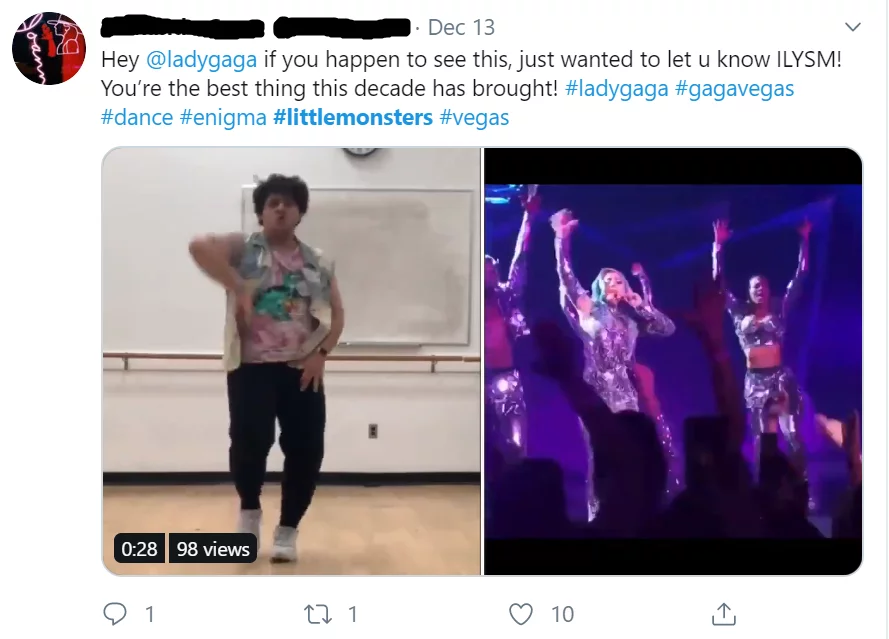
Further, the ways how celebrities use social media nowadays heighten the sense of intimacy and offer greater possibilities for interaction (Marwick & boyd, 2011). Fans expect celebrities to interact with them and therefore celebrities and in this case Gaga maintains the relationship between her fans by sharing personal information and communicates with them. For example, a fan can tweet Lady Gaga and she might even respond. In figure 3 you can see a fan who is trying to reach his idol by tagging her name in the hope to receive a response from her.
Little Monsters also communicate through the websites gagadaily.com and littlemonsters.com. Lady Gaga created a social network (website/app) called littlemonsters.com for her own fanbase. On this platform fans are chatting with each other and they upload pictures, videos and memes of Lady Gaga. On the other hand fans ameet each other in an offline context as well. For example during Lady Gaga’s concerts and at several events linked to the LGBTQ community where she often gives a speech.
Back to topLGBTQ community
So another aspect of the Gaga’s fanbase, is the connection to the LGBTQ community. Lady Gaga has always been an outspoken defender of LGBTQ rights. In a recent survey conducted by BuzzFeed News and Whitman Insight Strategies in 2019, 53% of LGBTQ Americans considered Lady Gaga a gay icon (Tenbarge, 2019). Gaga inspires many people who are struggling with their sexuality, which in some countries is still not the norm and unacceptable. Gaga’s message is to accept ourselves and others just the way they are. It doesn’t matter what kind of skin-color, belief or sexual orientation someone has.
Lady Gaga is personally involved in the current situation of society, issues such as bullying, sexual assaults and mental health issues. She speaks openly about her own struggles, mental health issues and traumas. "Lady gaga fans have a lot in common. Most of them come from the LGBTQ community, because of her views and she really fights for them." (Deborah Brough, Facebook Messenger interview, 2019).
Back to topSocial group
All social groups make social rules, also called the social fact. Someone is part of a group if their behaviour conforms to the rules and is judged by peers as conforming to the rules. To become a Little Monster a study written by Click, Lee & Holladay about the identification of the fans of Lady Gaga shows that there is a distinction between Lady Gaga fans.
Little Monsters believe they are more engaged than lesser-invested Lady Gaga fans. For example, many respondents who took part in the research of Click, Lee and Willson insisted that Lady Gaga fans are primarily interested in Gaga’s music, while Little Monsters explore all aspects of Lady Gaga’s persona (Click, Lee & Holladay, 2013).
After reading this study I wondered if other Little Monsters still think this way. I asked the opinion of the person who created the Facebook group Lady GaGa - True Little Monsters. She answered: “ Anyone can be considered a true Little Monster if they respect everyone, have a love and passion for Lady Gaga and appreciate what messages she brings as well as her talent. It's not about how long you've loved her it's your understanding of her and what she brings to this world that makes someone a true Little Monster." (Deborah Brough, Facebook Messenger interview, 2019).
For this person there is not a clear distinction among Lady Gaga fans. Only the fact that the person should have a passion for Lady Gaga and appreciates and understands her message to the world. Her personal intention to create this Facebook group was to meet people from all over the world who also enjoyed Lady Gaga’s music and talent. To share the common interest with others and to make friends. She believes that everyone can be a member of this Facebook group, nobody who wants to be a member has to prove that he or she is a true Lady Gaga fan.
Back to topSocial rules, norms and symbols
The community is considered as a social group, which has specific social rules and norms. The social group is passionate about everything what Lady Gaga does and they all share the same ideology regarding to the LGBTQ community. For this reason the Little Monsters community do not extremely deviate from the mainstream. Even more people are supporting the LGBTQ community and more countries allow gay marriages.
One of the respondents formulated the rules and norms of the Little Monsters: “The clear rules and social norms of Lady Gaga fans is we love and respect each other regardless of who we are and where we come from. She is all about spreading love especially in the LGBTQ community’s where there is still a huge number of obstacles to overcome.” (Yasmin Rogers, Facebook Messenger interview, 2019).
So another important rule within this community is that everyone should respect each other. This rule arises from Lady Gaga’s perspective on the world. Which is to appreciate each other without judging someone.
Seen from another perspective the current society consists of many distinct groups and niched transnational cultures. The same thing applies for fandoms. Many artists have a fanbase with their own rules and norms who are communicating online. For this reason Little Monsters can be seen as outsiders, because they deviate from other fandoms. According to Becker (1963) a social group has norms that members have to accept, but these are not particular written-down as rules. Instead there are social standards and norms that need to be accepted. Within this particular social group the rules and social norms are to respect each other and to try to love yourself.
The Little Monsters have both a name, an ideology and a universal symbol to unite them.
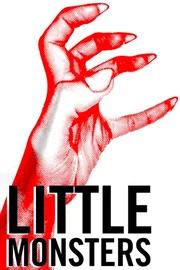
Furthermore, the social group created a universal symbol. The symbol (figure 5) of the Little Monsters is a claw made with the hand. It’s the same as in the music video of "Bad Romance". The symbol was created when Gaga saw a fan in Boston who greet another fan with the claw hand, from that moment on Gaga knew that the claw hand should be the Little Monsters symbol. The Monster Claw which is also known as the Monster Paw (Gagapedia, n.d.). Lady Gaga or her Little Monsters use the term “Monsterpaws Up” or “Paws Up” to greet each other and when they agree with something. The fans show their paws when they are inspired by Gaga’s music, art and fashion. Lady Gaga also refers to this symbol in her music. For instance in the song "Born This Way", she sings: "Just put your paws up 'cause you were born this way, baby". Eventually, Gaga got the claw symbol tattooed on her back, which she shared on her Instagram. It’s like a gift back to her fandom.
Back to topLady Gaga and her Little Monsters
To conclude, the social group who are behind the phenomenon Lady Gaga call themselves “Little Monsters”. Little Monsters are a social group who love Lady Gaga’s music, art, fashion and personality. They communicate mostly online on social media and websites. The fanbase of Gaga is huge and goes beyond national borders and is therefore transnational and superdiverse. The fanbase of Gaga is connected to the LGBTQ community, because Gaga supports those people who are struggling with their gender or sexuality.
Moreover, there are some strict rules and norms within this community. Everyone loves Lady Gaga and her view of the world to appreciate each other and to love yourself. Therefore one of the rules of the community is that everyone should respect each other regardless someone’s gender, sexual orientation and race. Eventually, the Little Monsters have both a name, an ideology and a universal symbol to unite them.
Back to topReferences
Becker, H.S. (1963). Outsiders: studies in the sociology of deviance. New York: The Free Press.
Biography Editors. (2018, January 25). Lady Gaga Biography. Retrieved November 22th, 2019.
Brough, Deborah. Interview through Facebook Messenger. 2019.
Click, M., Lee, H., Holladay, H. (2013). Making Monsters: Lady Gaga, Fan Identification, and Social Media. Popular Music and Society 36(3), 360-379. doi:10.1080/03007766.2013.798546
Gagapedia. (n.d.). Little Monsters (fanbase). Retrieved November 26th, 2019.
Hall, J. (2017, September 30). Lady Gaga Pioneered Online Fandom Culture As We Know It. Retrieved November 25th, 2019.
Maly, I. & Varis, P. (2016) The 21st century hipster: on micro-populations in times of super-diversity. Tilburg papers in Humanities.
Marwick, A. & Boyd, D. (2011). To See and Be Seen: Celebrity Practice on Twitter. Convergence: The International Journal of Research into New Media Technologies 17(2), 139–58. doi: 10.1177/1354856510394539
MJD. (2019, August 20). Lady Gaga albums and songs. Retrieved November 26th, 2019.
Rogers, Yasmin. Interview through Facebook Messenger. 2019.
Tenbarge, K. (2019, June 29). Lady Gaga's Stonewall speech touched on bisexual exclusion. Retrieved November 25th, 2019.
Varis, P. (2014). Digital Ethnography. Tilburg papers in Culture Studies.
Back to top
