


Paper
How do Kim Kardashian, Selena Gomez and Nikki Tutorials become role models?
The following paper will explain how women use social media to voice their thoughts on appearances. Regular women and celebrity women alike use social media to send their message on what the perfect image is.

Published date
Courses
Language, Culture and Globalization
Copyright
This work is licensed under a Creative Commons Attribution-NonCommercial 4.0 International License.
Read time
10 minutes

Women, Social media, and Appearance
This paper will discuss how women use social media to voice their standpoint about appearance. How they transform from ordinary women to influential celebrity women. Social media have become a powerful tool to send a message on what the perfect image is. Whether it would be to fight for the natural look or to promote and endorse products to create the perfect image, women are using social media in order to influence others to follow a path to reach the ideal appearance.
Back to topSocial media as a voice
Scrolling through Facebook two videos on women protesting on their appearance went viral. The first one is a video by Channel 4 News where a group of women in South Africa protest against the government because they wanted to be accepted as they are, whilst wearing their ‘natural’ hair in African hairstyle. In South Africa women are preferred to have a more ‘European’ look by straightening their hair, or wearing weaves, especially when looking for a job. These South African women wanted to be accepted as they are and did not want to feel obligated to comply with socially desirable appearances. The protesters were completely opposed to this because they wondered how one’s natural hair can be seen as a political act. They felt that the government did not want to allow them to do anything that originates from their own culture.
The other video that went viral features Jae West, an actress and activist sitting in the middle of Times Square in New York, with a sign asking everyone to help her to cut off her hair. On a poster she wrote the following message: “Beauty isn’t dependent on our external appearance. Cut or shave a piece of my hair to support this message”. As seen in the video, people were in shock and were hesitant to do what she requested, but afterward took the courage to do what was asked. In the end people supported her. The final message of the video was “our depth of beauty, like the ocean, is immeasurable by the surface”.
Both videos triggered me to analyze how women use social media to influence women’s appearance or to send a message about it.
Back to topThe power of social media
Research has shown how the social context of media use is crucial for people, particularly because significant others are relevant to the way people interpret and are affected by media (Milkie, 1999). Being social animals by nature, we are highly receptive when social media comes along (Qualman, 2009). Social media employ mobile and web-based technologies to create highly interactive platforms through which individuals and communities share, co-create, discuss and modify user-generated content (Kietzmann, Hermkens, Mccarthy & Silvestre, 2011). A recent report from the Pew Research Center found that the percentage of female internet users who use social networking sites well surpasses that of men – 75% vs 63%, respectively (Webershandwick, 2016).
In a recent study Klein (2013) found that marketers have perfected the ability to create a sense of desire and aspiration in society, thrusting “a very narrow ideal of female beauty” upon society because they have learned what type of portrayal attracts customers, and therefore money. Through a variety of images of women, advertisers help dictate society’s opinions and aspirations regarding appearance. The graphics within advertising are typically “idealized human beings” and therefore encourage the rest of society to strive to look the same.
In reality, what advertisers do through the use of nearly perfect models and actors in the advertisement, is to “actively promote a self-improvement motivation for comparison”. Now, the perfect female body is not only on the billboard down the street or in the commercial on TV but is strategically, yet seamlessly placed in social networks. The unachievable ideal is deceivingly normalized through social media, and is misleadingly presented as achievable. Comparisons have only become stronger and more powerful, and as a result more and more drastic measures are taken to reach a certain ideal.
Back to topIdealized human beings
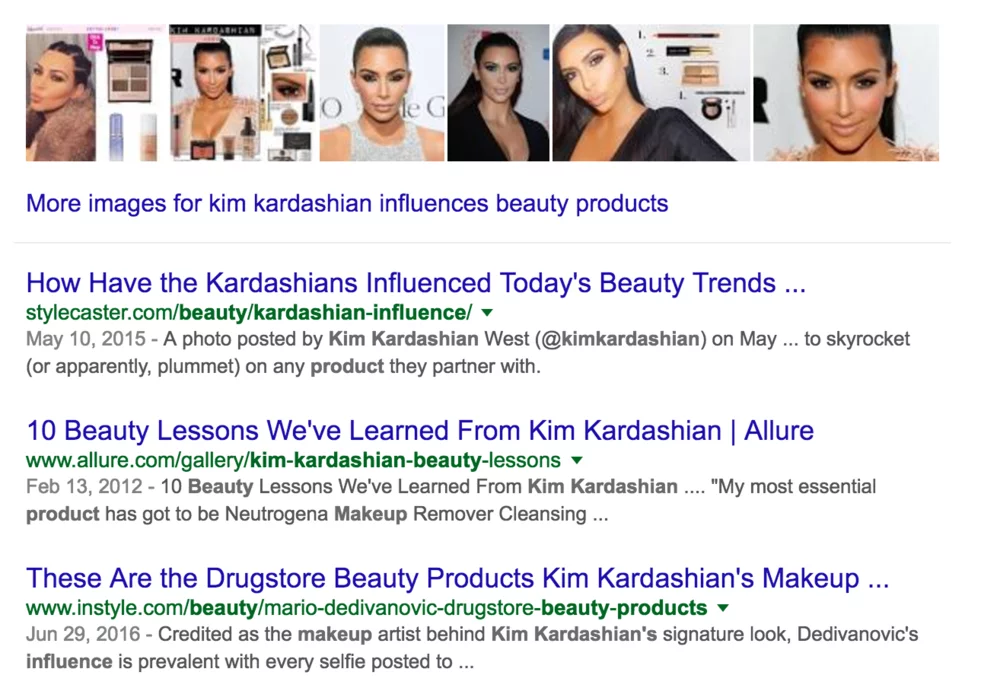
Three popular social media celebrities and beauty influencers are chosen in this paper in order to further analyze how social media is used to influence. First is Kim Kardashian who is an American reality TV star. She became “famous for being famous” and has had much success by knowing how to market herself to her fans via social media platforms.
Second is Selena Gomez', an American actress and singer. She is of mixed Mexican and Italian descent. Currently, she is one of the most followed celebrities on various social media platforms.
Third is Nikki Tutorials who is a professional hair and makeup artist from the Netherlands and a beauty guru on YouTube. All three use social media to publish beautiful pictures or content to endorse products. But they also use it to share their thoughts on body shaming, bullying, overexposing yourself, women's appearance and other relevant topics which they consider important to discuss with their fans. These women use their voice on social media not only to promote beautiful images of themselves or to portray an "unachievable" image of perfection, but also to voice their standpoints about relevant topics regarding women's appearance.
Let's take a closer look at these celebrities’ usage of their social media platforms. In each video, one can see three different scenarios. First, an interview with Kim Kardashian where she explains how social media has strengthened her success. Second, a speech was given by Selena Gomez where she requests her fans to not expose themselves on social media to gain self-worth. Third, a video made by Nikki that went viral about "the power of makeup". She expresses how makeup should not be used as a tool to change someone, but as a tool to accept one's looks.
Kim Kardashian
On October 23rd, in an episode of 60 minutes on CBSNews, Kim Kardashian was speaking openly to correspondent Bill Whitaker about monetizing her public life. The segment was about how advertisers can reach Millennials. When Kim was asked if her fame could exist without social media she responded: “Not in this way. I totally attribute my career to social media.” Consider that she has one of the largest social media followings of all time. She posts pictures and gets paid for clothes she wears, products she uses, and brands she endorses (60 minutes on CBSNews, 2016).
By 2011, according to Piazza, more Americans had heard of Paris Hilton than of Kim Kardashian. But Kim has surpassed Paris, according to the Davie Brown index, which determines a celebrity’s marketing value compared to a corporate brand. “Kardashian had a stronger appeal score,” Brown wrote, “was more likely to be a trendsetter, had more endorsement potential, and was more aspirational” (Halperin, 2016, p.155). More brands wanted to sign Kardashian for endorsement deals, more consumers wanted to buy products that would allow them to be like her, and the public liked her better. For example, Joan Barnes, president of Atlanta-based Marketing Specifics, revealed that a social-blogging company told her it had arranged for Kim to be paid $25,000 by Armani just for one tweet. The tweet drove forty thousand users to the Armani website in less than 30 minutes (Halperin, 2016). Kardashian and her sisters are known for being among the biggest influencers when it comes to driving consumer behavior. People want to imitate them by buying what they use, in order to fulfill the illusion of being able to look as pretty as the famous Kim Kardashian.
Selena Gomez
Recently, during the American Music Awards, Selena Gomez gave an acceptance speech where she explained that she had everything but that she was broken inside. Then, she continued saying that she does not want to see her fans’ bodies on Instagram anymore but rather what is inside of their hearts. In her speech, she stated that she no longer seeks validation from anyone. She referred back to her public relationship with her now-ex-boyfriend celebrity Justin Bieber.
Selena has over 103 million followers on Instagram and 46 million on Twitter. Knowing that her fan base is a loyal one, she wants that her fans stop exposing themselves to feel accepted. There is no need to display your body or beauty in order to get validation from anyone. This is a powerful statement because it is coming from someone who on various occasions has displayed herself in sexy and provocative ways on social media, but is now requesting her fans not to do so. Just like the other videos discussed, Selena Gomez is in this one making the claim that one should not let one's appearance be determined by someone else. Someone's outer beauty should not determine, but rather what is inside.
Nikkie currently is a well-known beauty guru with millions of followers through all her social media platforms. What sets her apart, is the fact that she does not have a typical ‘Barbie doll’ appearance. Nikkie is a micro-celebrity that makes how-to videos. She is not an actress from Hollywood or sports illustrated/ victoria secret model. The blond hair, perfect blue eyes with a slim figure that one expects to see when beauty content is discussed. She is the "normal" girl, just like me or you that gained a huge following thanks to her amazing skills and artistry.
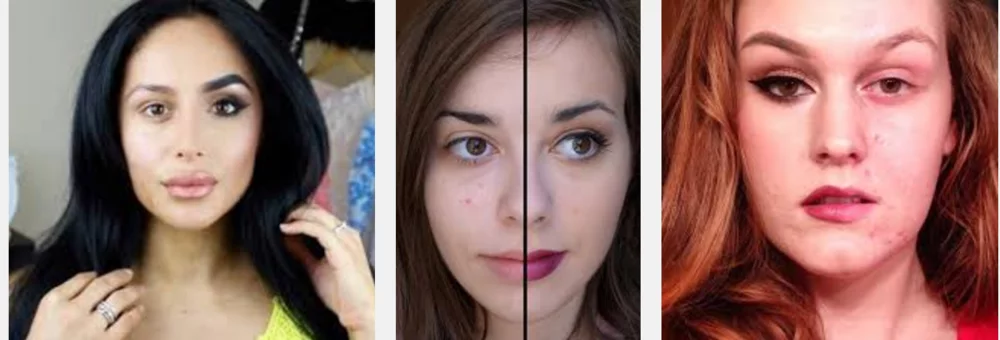
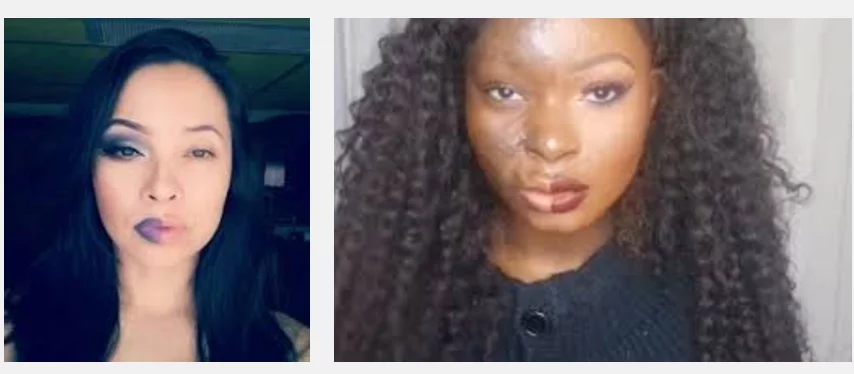
In various interviews Nikkie explained that her passion for makeup started when he was searching for beauty how-to videos on YouTube and decided one day to start doing makeup tutorials herself on how to achieve difficult makeup looks in a simpler way. Through her videos she became relatable to her viewers and gained a huge group of followers. Important for her is that people would understand that makeup gives women the opportunity to feel good. The power of makeup can be seen as a positive effect in helping women to gain self-esteem and confidence. Regardless of your ethnic background, makeup can be used as a positive influence. With her success she started a makeup trend that went viral “the power of make-up”. This trend included that one side of the face would be fully ‘glammed up’ and the other side would remain plain. This initiative was to showcase that women should embrace their natural beauty, but can also enhance it with makeup.
The power of social media to influence women’s appearance.
Social media have helped women to voice their opinion on appearance. Whether it would be to stand up for what they believe is the ideal image, or to create an illusion of the ideal image. Marketers create a sense of desire and aspiration in society, the ideal of female beauty, and therefore encourage people to look the same. Nowadays the image of perfection is not only on billboards and in magazines, but is strategically placed on social media. In contrast to only encouraging a certain ideal image, social media also gave women the opportunity to fight against what the marketers expose as perfect. Social media give women the opportunity to empower and demonstrate who and how they naturally are.
Social media provide celebrities like Kim Kardashian with the opportunity to become an influence on consumer behavior, and show how someone like Selena Gomez encourages women to stop looking for validation by exposing their bodies. Nikkie is also a great example of how social media is a tool to influence women. She is not the barbie or model type but still has a huge fan base that has an interest in beauty. All three women gained power thanks to social media. Power to achieve that people want to imitate them, power to stimulate them to buy what they use. But also the power to stand up for what they believe in and what they perceive is perfection.
Back to topReference
CBSnews. (2016, October 26). Kim Kardashian facing backlash after 60 minutes interview [Video file]. Retrieved on 23 November 2016.
Chanel 4 news. (2016, August 31). “We want to be accepted just the way we are.” These black women react to protest over natural hair in South Africa. [Facebook post]. Retrieved on 23 November 2016.
Halperin, I. (2016). Kardashian dynasty. New York: Gallery Books.
Kietzmann, J. H., Hermkens, K., Mccarthy, I., & Silvestre, B. S. (2011). Social media? Get serious. Understanding the functional building blocks of social media. Business Horizons, 54(3), 241-251. Doi: 10.1016/j.bushor.2011.01.005
Klein, K.M. (2013). Why Don’t I Look Like Her? The Impact of Social Media on Female Body Image.
Milkie, M. A. (1999). Social Comparisons, Reflected Aprraisals, and Mass Media: The Impact of Pervasive Beauty Images on Black and White Girls’ Sef-Concepts. Social Psychology Quarterly, 62(2), 190. Doi: 10.2307/2695857
Qualman, E. (2009). Socialnomics: How social media transforms the way we live and do business. Hoboken, NJ: Wiley.
Selena Gomez Canada. (2016, November 20). Selena Gomez AMAs 2016. Acceptance Speech for Pop/Rock Female Artist Of the Year [Youtube]. Retrieved on 23 November 2016;
The Liberators international. (2016, September 6). She let the public cut her hair off [Facebook post]. Retrieved on 23 November 2016.
[Webershandwick]. (n.d.). Retrieved November 29, 2016.
Back to top
