

Article
Everything you need to know about E-girls?
How e-girls online behavior and the mockery towards them create the Internet girls image

Published date
Courses
Social groups in the digital world
Copyright
This work is licensed under a Creative Commons Attribution-NonCommercial 4.0 International License.
Read time
10 minutes

E-girls are a youth subculture popularized by Tik-Tok and Instagram. Although the term has been around for more than a decade now, it became notably popular at the beginning of 2019, a little later after Tik Tok came out. Heavy make-up, dyed hair, chains, septum piercing, and layered clothing are part of the e-girls aesthetic.
Within the community can be distinguished different types of e-girls – Tik Tok, gamer, emo, and artsy. But e-girls are not only known for their "kawaii" internet presence the term was previously used to disparage women. Nowadays, while e-girls inspire young teenagers online, some make the new trend an object of ridicule.
To be an e-girl means to exist online, mediated. From here emerged two other names for them - "Internet" or "electronic" girls. In this article, I will present an online ethnographic analysis based on their Internet behavior in order to get an insight into their culture and role as a social group in the digital world. I will investigate the different kinds of e-girls, the indexes, and the negative attitude towards them, which construct their culture and identify them as deviant.
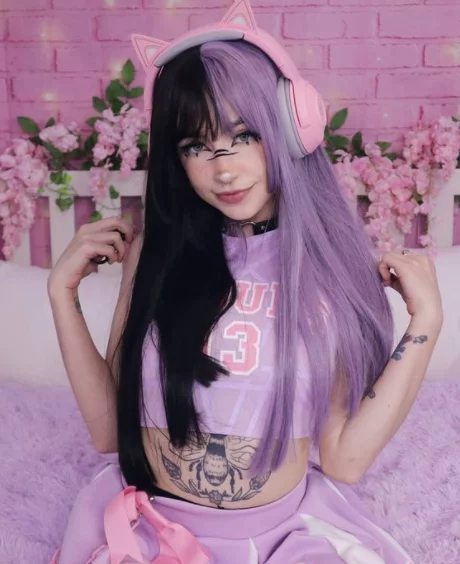
What is an e-girl?
Urban Dictionary offers us two definitions of the term:
Definition 1: egirls are usually girls who play games online and can be found on either Twitter or Discord, send nudes/ thirst traps or even sell them. They can also be found on twitch, the difference between a normal girl who plays video games and an egirl is that an egirl begs for money or sells herself for it.
As I already mentioned, the term was used derogatorily to belittle women. Men objectified girl gamers, who they saw as attention seekers invading male spaces (games) by flirting online. As Becker stated in his book "Outsiders," all social groups, and in this case, the gamer one, create certain rules, "specifying some actions as "right" and forbidding others as "wrong.""
Male gamers portrayed e-girls as indiscriminately sexually active women whose aim was to get attention from professional boy gamers. Following Becker's thought, according to boy gamers, e-girls' "cannot be trusted to live by the rules agreed on by the group" as their behavior was inappropriate. This is why they are regarded as outsiders.
However, Becker suggests that outsider can reject the rules by which is being judged. An example is Rusty Fawkes (Figure 1), a 24-year-old cosplayer and Twitch streamer, who embraced this definition: "I try to bring a bit of irony and humor into the situation because I mean, I love all my fellow e-girls." Internet girls as Rusty gave rise to the second definition of the term:
Definition 2: An e-girl is a "category" word: it's used to assemble many different specific types of girls that fit into a certain specific trend or "type". There's many mainstream/commonly known types of e-girls, for example:
- the emo e-girl
- the tiktok/vsco e-girl (can also be know as the aesthetic e-girl)
- the gamer e-girl
- the artsy e-girl
This definition of an e-girl shows us the "modern" understanding of the term, which emerged from Tik Tok. To understand it better, I will analyze the different types of e-girls.

Different types of e-girls
Often seen as "emos," goth e-girls usually dye their hair black and wear black clothes, long sleeves, fishnets, stripes, plaid skirts, and chunky boots or heels (Figure 2). They put on black lipstick, thick eyeliner and draw crosses or tears under their eyes for the make-up. Accessories such as leather bracelets and multiple chains complement the whole look.
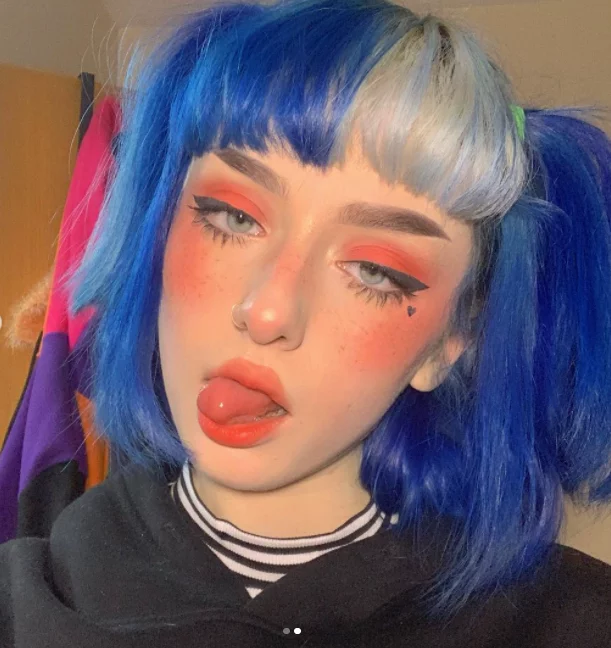
Tik Tok e-girls gained popularity on the social media platform, which we can tell from their name. They wear an excessive amount of blush on their cheeks and noses along with black hearts under their eyes (Figure 3). These e-girls wear thick eyeliner, short dresses, and accessories and are often compared to Manga characters. Whether it is a wig or not, their hair is typically colorful dyed in non-natural colors such as pink or blue. Tik Tok e-girls outfits are either cosplay or Lolita fashion (a Japanese style, influenced by Victorian clothing).
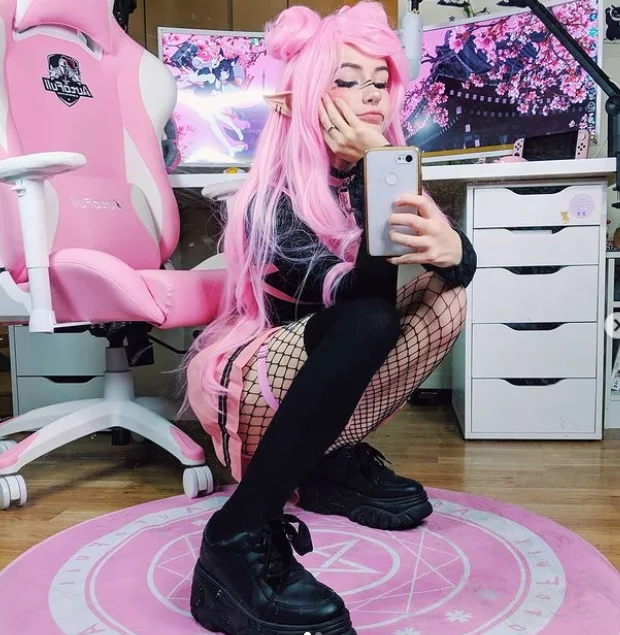
As I was doing my research, it turned out that there are different types of gamer e-girls. To get an insight into them, I actual gamer e-girls who I messaged on Instagram. The first type gamer girls they described as the one that "publicly plays video games for attention and acts like airheads to get views and money. They typically wear a lot of make-up and provocative outfits". Their actual gaming skill level ranges and cannot be specifically targeted to be good or bad. Still, the overall impression is that "they are terrible gamers."
The other gamer e-girls "truly enjoy playing video games and do not care if they receive attention or not." They are “serious and skilled”.
The last type of gamer girls is the who "play privately and can be completely infatuated in the gaming world." However, they "don't really show that they game to avoid potential bullying from other men or even women." Rusty Fawkes is a prime example of a gamer e-girl (Figure 4).
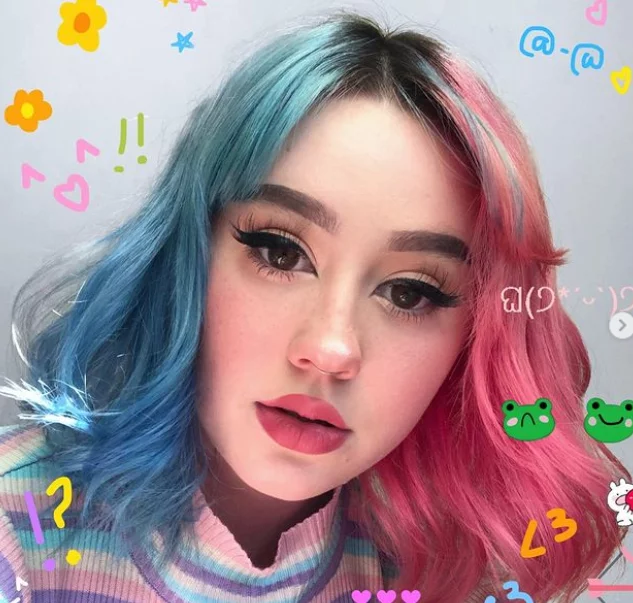
Artsy e-girls are the last type (Figure 5). For the most part, they dress in pastel colors and wear scrunchies and hair clips. They are known for their make-up skills and clothing style. Their pictures usually have emojis, flowers, or hearts in them.
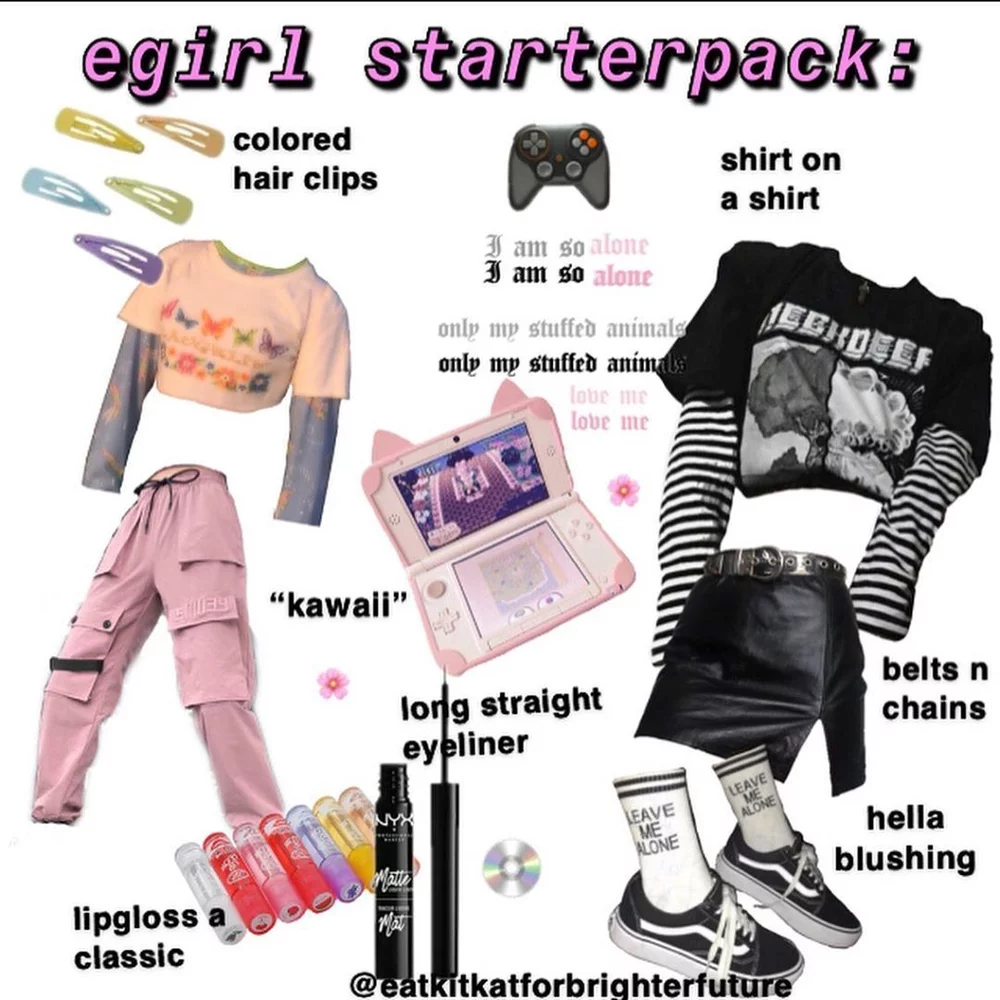
Even though there are different types of e-girls, they share a common identity, commodities, taste of music, love for anime, aesthetics, and social media discourse. This can be seen in Figure 6, which shows the so-called "e-girl starter pack" by which we can easily recognize e-girls. But what emblematic features are “enough” for a girl to be approved as an authentic member of this identity category? As Maly and Varis suggest in their article (2016), “Identity is a matter of ‘enoughness". This means that there are certain often-minimal features, which a girl has to adopt in order to become a real member of the e-girl category. I will try to explain this with the notorious "e-girl factory" videos below.
Scrolling through Tik Tok, it is almost impossible not to come across these meme videos about the formation of Internet girls. The concept of the is as follows: a girl opens a door, on which there is an "e-girl factory" sign, then someone abducts her and starts putting the stereotype make up, associated with e-girls - a lot of blush, eyeliner, and hearts under their eyes. With pigtails hairstyle and layered clothes, starts dancing the "Me Me Me" dance, which I will explain later. The aim of these videos is to ridicule the Internet girls using the already mentioned stereotypes but they also show what is enough for a girl to be identified as an e-girl. We see that certain identity markers such as layered outfits, pigtails, heavy eyeliner, and blush make an Internet girl (Maly & Varis, 2016).
Back to topE-girls exist exclusively on social media
As I already mentioned, e-girl is short for "electronic" or "Internet" girl. The micro-community, "constructed through networked technologies," uses social media platforms such as TikTok, Instagram, Twitch, and YouTube (Anderson, 1991). E-girls use the online space to express themselves by playing video games, creating videos on Tik Tok or uploading pictures on Instagram, edited in apps such as Picsart (the editing app all e-girls use). Electronic girls express their culture through their Internet personality. Outside the online space, they lose all the attributes, inherent to them. This is why it is unlikely to spot an e-girl off the Internet. Moreover, e-girls themselves may "never know most of their fellow-members, meet them or even hear of them" (Anderson, 1991).
Back to topInternet behavior
As we have already understood, e-girls are completely Internet-based. The majority of them use Tik Tok. The standard videos they create are performing the "Me Me Me" dance (above), making the "e-girl face," cosplaying, or just acting cute. The "Me Me Me" song to which e-girls dance on the platform is an electronic pop song made by the Japanese DJ Teddyloid. The song quickly gained a cult following among anime fans, namely e-girls, who started doing the dance from the original video. As I mentioned, the same dance is used in the „e-girl factory“ videos and is indexal to an e-girl identity.
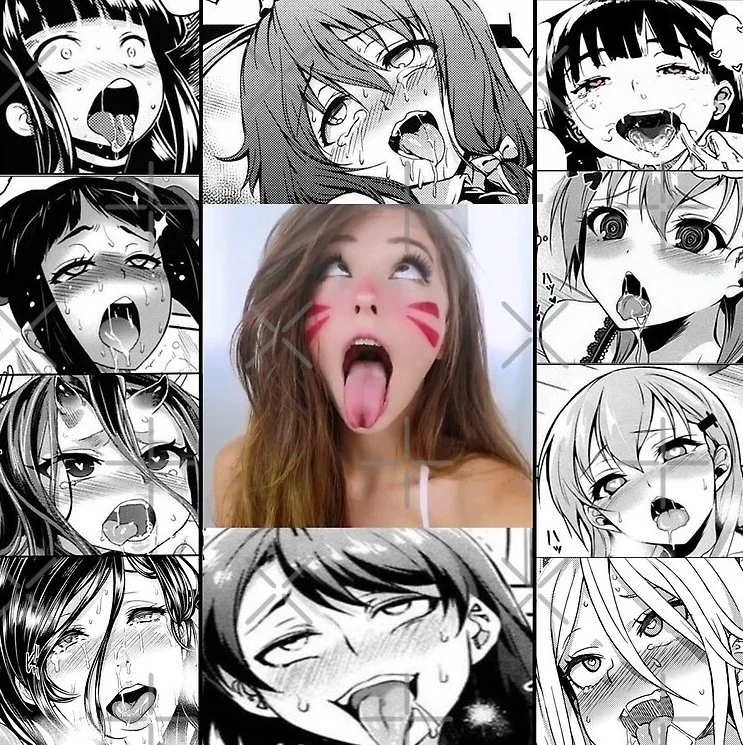
The notorious "e-girl face" is tongue out and open rolled up eyes (Figure 7). Electronic girls usually post pictures making this face on Instagram with the hashtag #ahegao. Ahegao is a Japanese term, which means an orgasm in adults' anime. I suppose that many of the girls, who upload such pictures, are not familiar with the origin of the facial expression as the majority are underage.
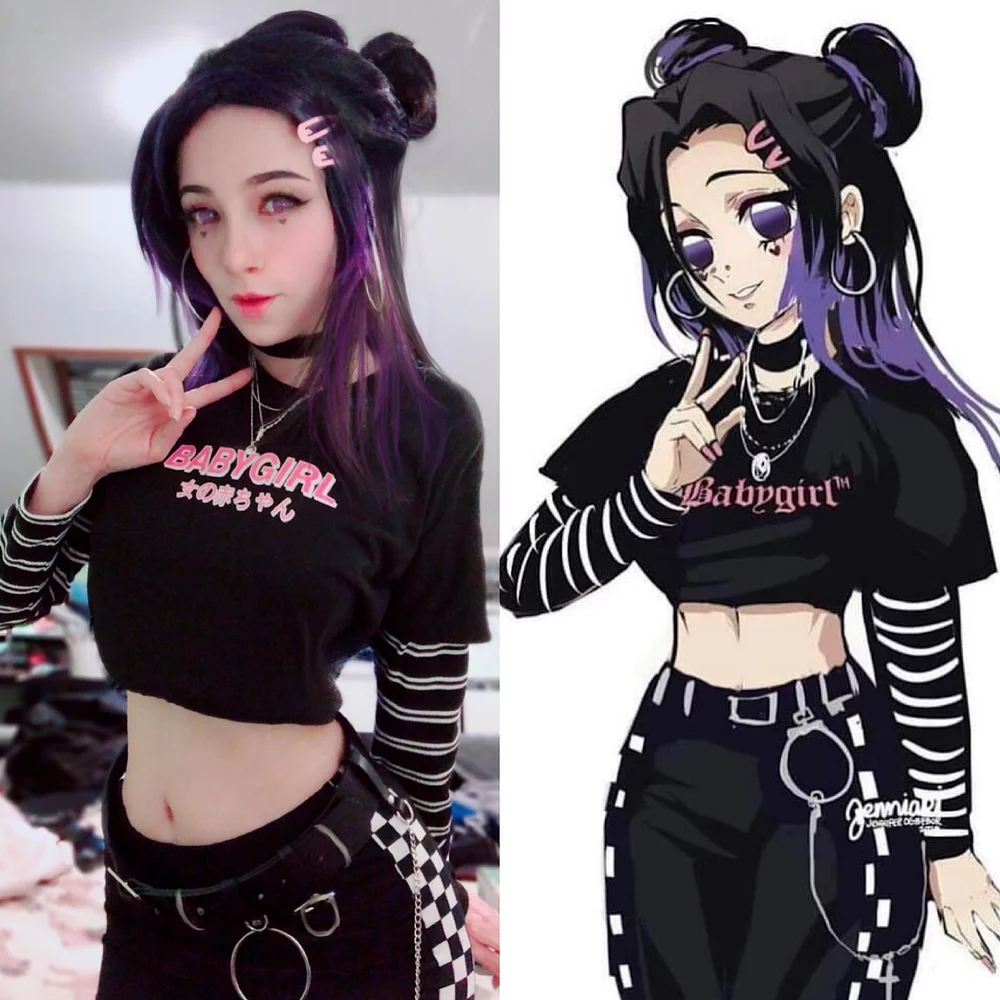
Another popular trend among Internet girls is cosplaying. Anime is not only an obsession of e-girls but also one of the primary sources for cosplay. This is why it is common to see e-girls on Tik Tok wearing costumes and fashion accessories to portray a specific character (Figure 8). Moreover, the overall e-girl look has an intentional resemblance with anime characters.
E-girls talk
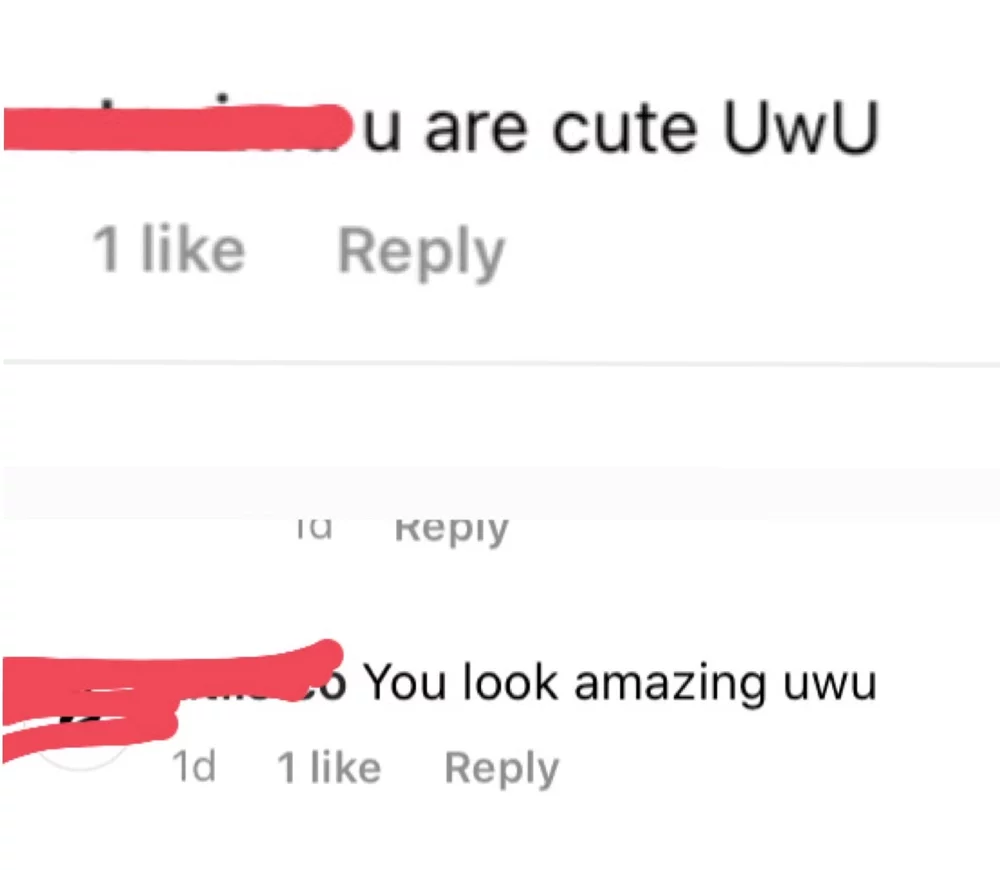
Figure 9 shows the language used by e-girls. "Uwu," as seen on many posts, means overwhelmed with cuteness. Sometimes it denotes quirky happiness or simply joy. Another commonly seen word in an e-girl discourse is "kawaii." The word is a huge part of Japanese culture and can be found in anime, art, fashion, and music. It originated from a phrase, which means "blushing," but now is widely translated as "cute."
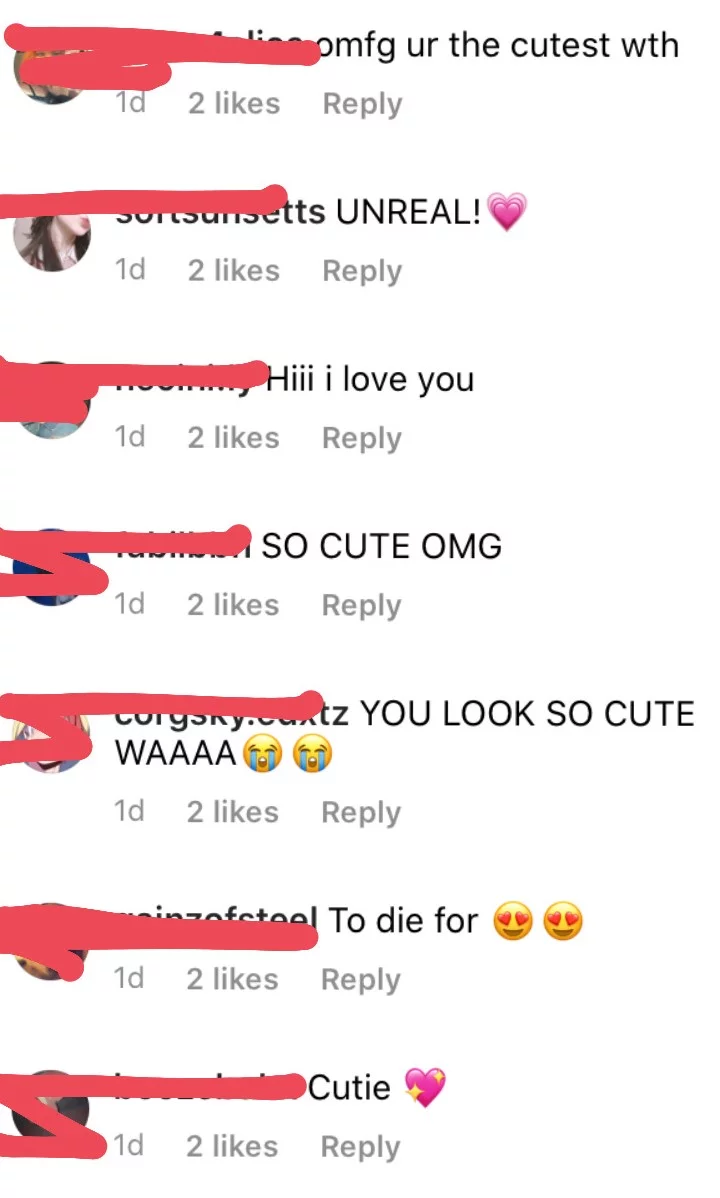
Looking at the comments under e-girls' posts, it became clear to me that nearly all were positive (Figure 10). Some of them included slang such as "luv" (lover), "patootie" (attractive girl or a girlfriend), and "kween" (queen). Such words are part of the vernacular language, inherent to the social group of e-girls.
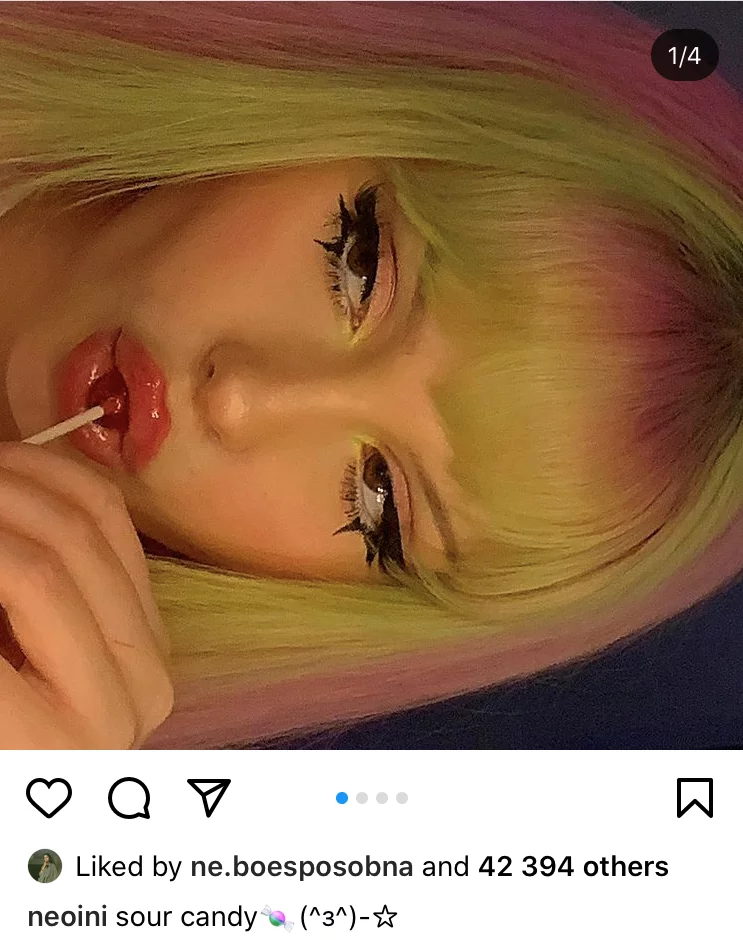
Usually, the comments include "kaomoji" – Japanese emoticon style. The one in Figure 11 – "(^ω^)" shows love. The character "ε" (bow lips) indicates joy and happiness. Others commonly used kaomoji by e-girls are "(´♡‿♡`)" and "(♡ω♡ )", which show love and desire to kiss.
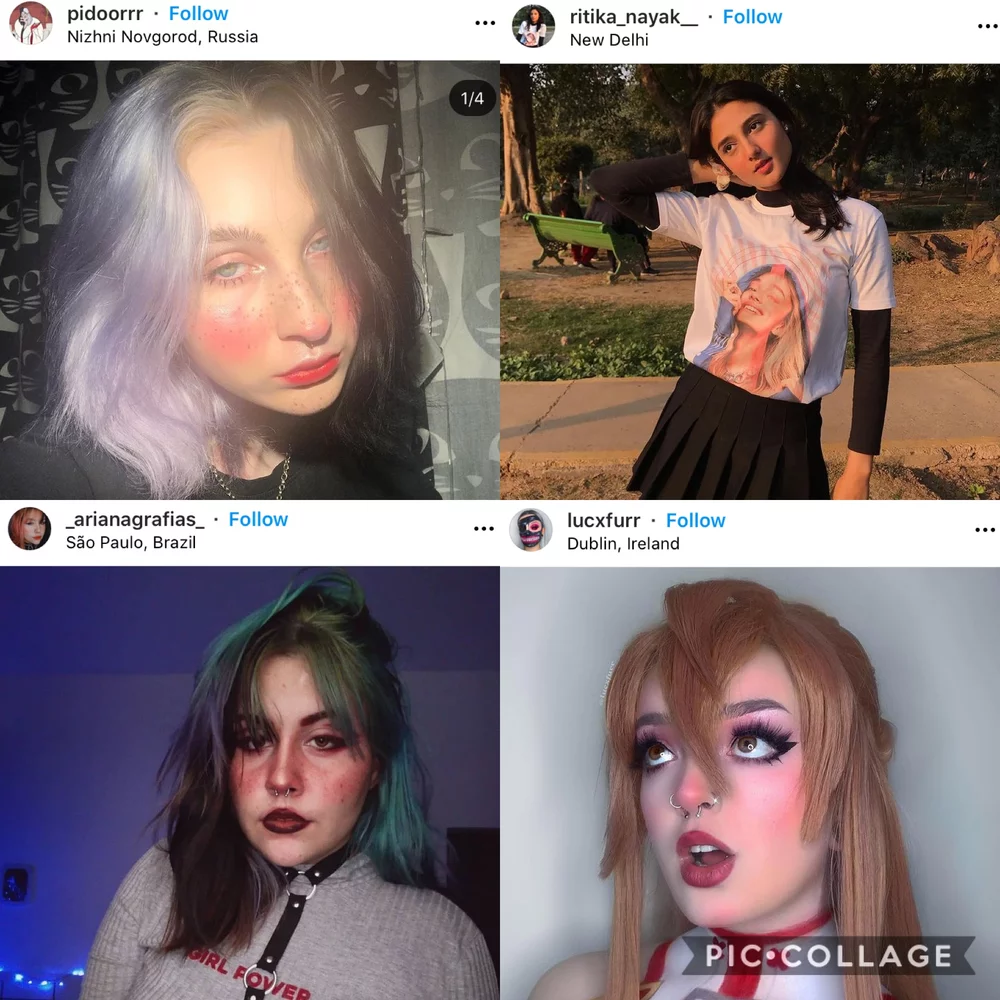
E-girls are most popular in the United States. However, if we search #e-girl in tags on Instagram, we can see that many girls worldwide have successfully adopted the indexes inherent to the electronic girl aesthetic: dyed hair, rosy cheeks, layered clothing, chains, etc. The collage in Figure 12, with e-girls from Brazil, Ireland, Spain, Russia, and New Delhi clearly shows that. Thus, we can say that electronic girls are a global micro-population as their indexes are "recognizable in a global scale" (Maly & Varis. 2016). This is so because being an authentic member of Internet girls' micro-community does not require having specific branded commodities. In this sense, girls from both Europe and Asia, for example, can “have, display and enact ‘enough’ of the emblematic features in order to be ratified as an authentic member” of e-girls’ identity category (Maly and Varis, 2016).
Back to topMockery
The video "HOW TO BE AN EGIRL" above shows another ridicule of the "brand new type of irritating white girl." The YouTuber hantheloser offers a mocking lesson on how to "become the newest member of the Internet's favorite platform," namely Tik Tok. She calls e-girls "the family letdown" who seek "the precious source of validation from random strangers" because they have "daddy issues." The video is accompanied by rather negative comments such as "I'll yeet myself out this window any second" and "just call urself emo and LEAVE".
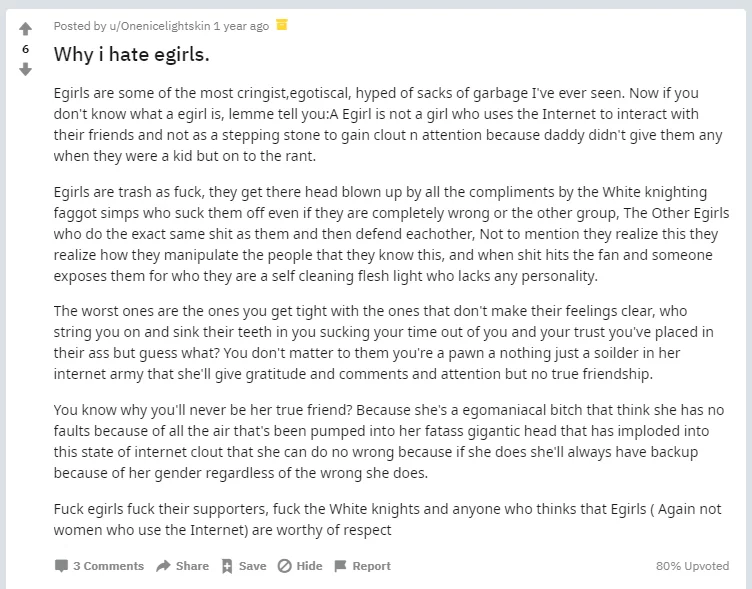
On Reddit, I came across a relatively long post called "Why I hate e-girls" (Figure 13). In it, the author expressed why he hates e-girls and calls them "trash." The post ends aggressively: "Fuck egirls fuck their supporters."
Deviance
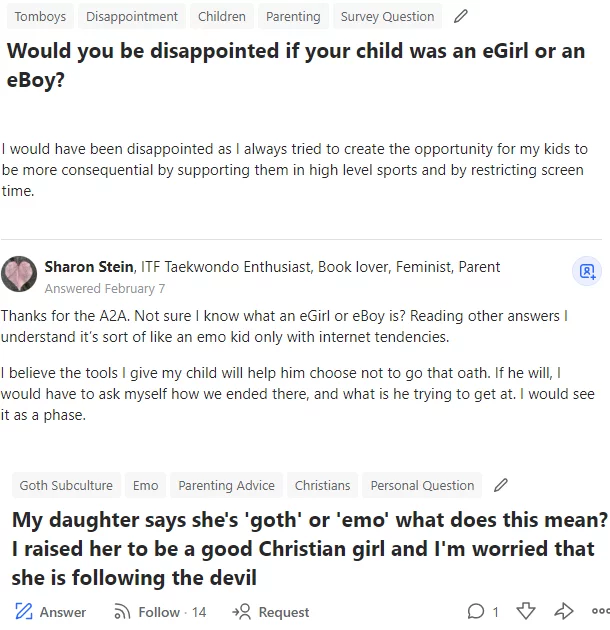
On Reddit and Quora, I found a couple of publications about e-girls by parents, seeking opinions from other users (Figure 14). They were worried about their children calling themselves e-girls or e-boys and even compared it to an "oath." The answers to those questions were even more surprising: "I believe the tools I give my child will help him choose not to go to that oath" and "I would have been disappointed as I always tried to create the opportunity for my kids to be consequential" . A father, worried that his daughter is "following the Devil," "identifies deviance as the failure to obey group rules" (Becker, 1963). He has raised his girl to be a good Christian, and, in his eyes, she has failed to obey the Christian rules.
Apparently, identifying as an "e-girl" is a deviant behavior for some elders. As Becker suggested in his book Outsiders, often adults make the rules for the young ones and even impose them, as they are “considered neither wise enough nor responsible enough to make proper rules for themselves.” So when elders face something that is unfamiliar to them, such as the e-girl trend, they regard it as deviant. This contradicts with youngsters as their both understandings of what behavior is proper differs.
Back to topFinal thoughts
Being an e-girl means to exist online, to take to the Internet to express yourself. This creates the homogeneous culture of the micro-community with its style, talk and normativities. And because e-girls do this openly, embracing the humiliating meaning of the term, they are often misunderstood and an object of ridicule. Indeed mockery, apart from the Internet girls' behavior, shape their image. However, e-girls have two identities. In the offline world, they live a normal life, put way less make-up, and dress differently from their online persona. Therefore, we can conclude that e-girls can easily embrace both online and offline life.
Back to top
More from this author