

Article
Capharnaüm: an engaging story about Beirut
Capharnaüm is a realistic docudrama about a twelve-year old boy who wants to sue his parents. This paper discusses the realism and effects on the audience.

Published date
Courses
The truth of fiction
Copyright
This work is licensed under a Creative Commons Attribution-NonCommercial 4.0 International License.
Read time
15 minutes

When the film Capharnaüm premiered at the Cannes film festival in 2018, it won the jury price. The audience was also impressed by its confronting and incredible story. Capharnaüm (“Chaos”), directed by Nadine Labaki tells the story of Zain, a twelve-year old boy who wants to sue his parents for giving him life. He and his family are refugees from Syria, now living in Lebanon. Zain runs away from his parents because they are having his sister an arranged marriage. After running away, he is doomed to committing crimes and going into jail.
The film is situated in Beirut, where Zain wanders on the streets trying to feed himself and a street baby named Yonas, who is left alone by his mother Rahil who is an illegal immigrant and could not take care of him anymore. Zain gets to know different people and is involved in heartbreaking situations, such as getting denied to go on a refugee boat because of his absent identity papers."The film tells about the struggles of parenthood in a poor country, but told through the eyes of a twelve-year old child. It also tells about the refugee crisis and the importance of identity papers to prove that people actually exist (Pomeroy & Rantala, 2018).
This paper explores the ways in which Capharnaüm affects the audience and their view on the occurred events that are illustrated in the film. To answer this, a research question is conducted and reads:ow does Capharnaüm make the occurred events occurring illustrated in the filmbelievable to the audience and how does thse events affect themthe genre of docudrama that representsintothereof
.After that we willWe now look at the different aspects involving the impact of the film on the audience and how the occurr events illustrated can have an emotional engagement with the audience. The first section of this paper will examine the docudrama as a genre. It will then go on to discussing the realism in the film and what role the characters play in this. The remaining part of the paper will examine the difficulties with a realistic film.
Back to topocudrama
Capharnaüm can be seen as a docudrama. A docudrama, short for documentary drama, is a film genre where a fictional form is combined with documentary content. In Capharnaüm, the events illustrated have occurred but the form is like a fictional movie. This is different from an observatory documentary, where there is real material show, like archive footage and interviews.
However, in Capharnaüm, a lot of the Lebanese neighbourhoods are show in their real state. It shows drone shots of the slums and poor kids on the street selling all kinds of stuff to make money. Another aspect of the documentary style in this film, however not the traditional, observatory style, is that not everything show in the film is really significant. We often just see how the people are living to paint a picture of the Lebanese life in the slums. In these moments, we do not see any events that have big effect on the story. This technique is called ‘a slice of life’.
“Docudramas are useful because they portray issues of concern to national or international communities, in order to provoke discussion about them” (Lipkin, 2006). This film shows the poverty in Lebanon and the effects it has on families especially children. We see Zain, who tells an individual story illustrative of these particular issues. As the director, Nadine Labaki, mentions: “For me, film-making and activism are one and the same thing. I really do believe cinema can effect social change.” (Cooke, 2019). Provoking discussion in the audience is one of the most important functions of the docudrama, different from Hollywood films where it is about entertainment and making profit. Therefore, this film is related to Third Cinema, which is discussed later on.
Back to topHow ‘real’ is Capharnaüm?
To provoke a discussion in the audience, there has to be something shocking or engaging in the film. In Capharnaüm there are different aspects that help to bring up a discussion. The most notable aspect is that the film is based on real events. After seeing the film, the audience will break their head over the notion of realism. ‘Is this real happening? Or is it dramatised for the film?’ ‘Can we trust the story?’ To answer these questions we need to consider if the audience thinks it is a believable story. Is it a story that could have happened or is it too obvious being fantasized?
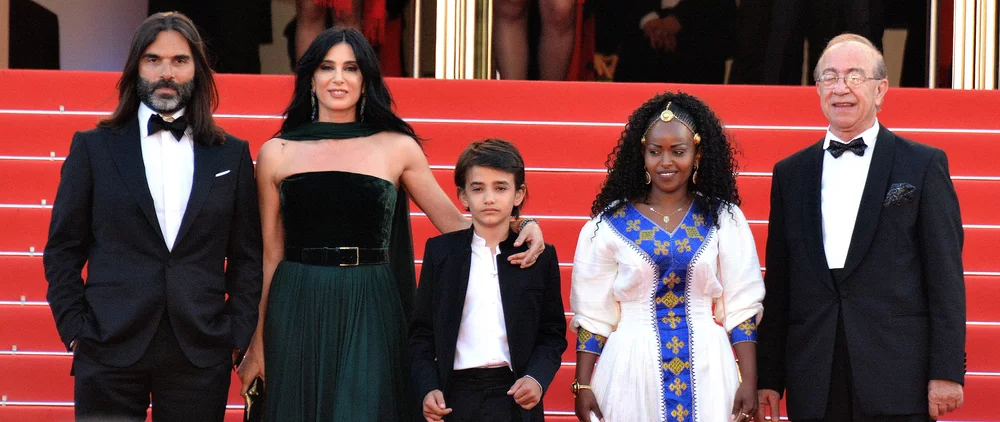
Capharnaüm is made believable in different ways. For a start, the characters in the film are played by non professional actors who know about the real situation illustrated in the film. The audience may not notice this, but it is clear that the “actors” fit the story very well. “Zain Al Rafeea plays the character of Zain and is a Lebanese boy who at that time stayed illegal in Beirut” (Beekman, 2019). So, he did not act, he was the character himself. This makes the “acting” more believable.
"Zain lives, in the film, with an illegal immigrant from Ethiopia, Rahil, for a while (Cooke, 2019). Rahil is played by Yordanos Shiferaw, also an Ethiopian illegal immigrant. A street baby plays also a part in the story, who Labaki found when she was observing the situations in Lebanon. “And for the character of Zain’s mother, the director was inspired by a woman who had had 16 children, seven of whom died from neglect" (Cooke, 2019).
The anger of the children inspired me. Why did my parents conceived me, they said, if they do not care about me? That is not about poverty or about going to bed hungry. It is about the lack of love and care"
The events illustrated in the film are actually happening in Lebanon nowadays. Director Nadine Labaki immersed in the world of the poorest children of Beirut for four years. She visited youth jails, detention centres and even lawsuits. She got engaged and involved in the world of Beirut. She asked the children there if they were happy to be alive and the answer was often ‘no’. She also mentioned: “The anger of the children inspired me. Why did my parents conceived me, they said, if they do not care about me? That is not about poverty or about going to bed hungry. It is about the lack of love and care” (Beekman, 2019).
The ‘real’ Zain lived in a much more difficult situation than in the film. However, his parents do love him. So, some aspects in the film are made up, but always with the thought that it could be the truth. For example, the prosecution of the parents is made up; it is not possible in reality to sue your parents for giving you life. But, if it was possible, the children would have done it. We can say that the events in the film are not dramatised to make it more beautiful. This is real and happening. The characters had almost no script and improvised along the way to achieve intense realism. This was possible because they know everything about their own lives.
Because of the absence of a script, it was a laborious project. "Nadine Labaki mentioned filming 520 hours of footage over six months (Pomeroy & Rantala, 2018). Another example of achieving realism is that “when shooting the film, the mother of the street baby was arrested because of illegal staying. What is fascinating is that in the film the street baby also loses her mother” (Beekman, 2019). When filming, truth and fiction were intertwined, which made it even more real and confronting for the director. Labaki knows the situation so well, because of her research and relation to the country, that the invented events happening in the film became real and truthful.
Back to top
Reflection as main purpose
Capharnaüm is a good example of a Third Cinema film. “The term ‘Third Cinema’ reflects its origins in the so-called Third World, which generally refers to those nations located in Africa, Asia, and Latin America where historical encounters with colonial and imperial forces have shaped their economic and political power structures.” And
LeBlanc says: (Dodge, 2007).“The films related to Third Cinema try to be socially realistic portrayals of life and emphasize topics and issues such as poverty, national and personal identity, tyranny and revolution, colonialism, class, and cultural practices.” (2018).. The film shows the realistic life of Zain and the effects of his poverty. But we also see his personal and national identity and the meaning of this in his life. To add “Third Cinema challenges viewers to reflect on by the experience of poverty and subordination by showing how it is lived, not how it is imagined” (Dodge, 2007). The technique, ‘a slice of life’, can be related to this because it does not always shows big events.
Zain has many difficulties and setbacks in the film and this can be misleading in relation to the realism of the film. The audience might think that the film is dramatised, because everything is going wrong. First, Zain loses his sister because of an arranged marriage with the man he hate. Then he runs away and is left for dead. And when he finds someone who can feed him, she left him with her baby. And to make matters worse, he has to leave the baby for money to get on a boat where he cannot get on because of absent identity papers. The film is a real drama and there is hardly any hope for a good ending throughout the whole film. However, the director did not choose to dramatise the events, but based these on findings of her field research.
The audience will be somewhat distanced from the story, because they are probably not as poor as Zain. When you think about this film premiering in Cannes, it is seen by (mostly) rich and famous people. And if you are not an immigrant yourself, you are probably not even capable of imagining these horrible situations. But this is a way of letting the audience know that it is happening and consider them to think about it, even if it is in whole other social class. It is good to think about the struggles someone completely different from you
Back to top
ympathising with Zain
As seen before, the characters in the film play a huge role in getting the audience engaged with the story. The characters in this film are emotional affected by the awful situations, which makes the audience personally engaged with them. Even when their background is completely different. The audience sees everything through the characters’ eyes and is possible to think about the personal events that are happening. Batty states: ”It is through such characters that we experience media. It is through their perspective, point of view, and narrative drive—through agency—that audiences are able to follow what is happening” (2014).
In Capharnaüm, Zain goes through a development, which we can also call character journey. The attachment of the audience is structured in a way that guide them through identification with the characters. In this film, the development is especially an emotional development. As Batty states: "Physical action influences emotional development, and emotional development influences physical action (2014)
An example of this development is that Zain’s sister Sahar is getting an arranged marriage with a guy named Assad, who Zain hates. When Zain finds out, he is devastated and angry at his parents for letting their daughter go so easily. But for his parents it is an easy decision. When having a lot of children to feed and no money to do so, this arranged marriage is a relief. So Sahar, even though she is resisting, is taken to Assad to marry him.
After running away, Zain needs to come back home for his identity papers. However, his parents do not have these and he finds out that Sahar is in the hospital. Apparently Sahar was pregnant but did not survive it, with her only eleven years old. This is terrible for Zain and because of this emotional development, he is so angry that he stabs Assad with a knife. This circle of emotions influencing physical actions and the other way around is very visible in this film. Because of this, the audience can identify with his actions and emotions. They will understand his decisions and feel connected to him.
Zain has to overcome different obstacles and as audience you hope for the best.
.
"We need someone or something to guide us through the narrative — a central identification figure — we psychologically connect to the character as a way of rendering meaning possible" (Craig Batty)
Zain is the personification of these struggles and guides us through the story of poverty. The good ending of the film fulfils this hope, in a way. Zain finally receives his papers with a laughing smile on the front. But, the prosecution of his parents is just put into an archive with other, dozens of files. The audience is thus left behind both feeling relieved and disappointed. This mix of emotions, throughout the whole movie, makes the audience suck into the story.
What Wilson (2014) mentioned about the TV series The Wire, can also be applied to Capharnaüm "It is a tragedy of systems and institutions rather than of individuals. However, in Capharnaüm the tragedy of the individuals is adding more emotion to the tragedy that is happening with the systems. “Zain is actually not only suing his parents, he is suing the whole system because his parents are also victims of that system — one that is failing on so many levels and that completely ends up excluding people” (Aridi, 2018). This adds a new layer to the struggles Zain has to deal with. He is the voice of all the children and families that are influenced by the refugee crisis.
Difficulties with a realistic film
inge
Even though there are a lot of wonderful aspects about a realistic film, there can be some difficulties. Lipkin (2006) explains: "Think about the permissibility, usefulness and even danger of mixing the functions of documentary and drama When showing this film to the people in Lebanon, they reacted in two different ways. One part of them was shocked and moved by the discussion it had caused. However, the other part is denying the events that are illustrated in the film. "They do not want to look in the mirror and see the flaws of the country (Cooke, 2019).
This shows that the message of the film is an important and good starting point for the audience to discuss these issues. But, mixing the functions of documentary and drama can mislead the audience in forming their opinion about the events illustrated in the film. They could misinterpret the message of the film. They will know it is not a typical documentary because of the form in which it is told. Considering that not everyone will immediately understand that these are real events, this movie can lose its value.
The film is not explicit about this realism by mentioning it before or at the end of the film. The audience has to think for themselves about this. But the confirmation of the real events illustrated is achieved by making it as ‘real’ as possible and to use a personal and engaging story. On the other side, trusting a film to be complete fictional is another difficult consideration.
dabout thatAlso, when the audience will do some research about this film, they will immediately know thattis.And that tthe use of s nHowever, Capharnaüm achieves to make the audience think about this in the first place and that is already a good way to let them think about these issues.
Back to topA starting point for discussion
The docudrama Capharnaüm tells the story of Zain, who wants to sue his parents for giving him life. Because of the extreme poverty and institutional difficulties with immigration papers in Beirut, Zain is doomed when he runs away from his family. This is a film about real events that are happening now. It can be also be seen as a docudrama because the documentary content includes ‘a slice of life’; not all the events in the film are noteworthy, big events. However, the main message of the film will provoke discussion in the audience.
Capharnaüm is made believable in different ways. The crew consists of non-actors, found on the streets of Lebanon by the director when she was doing research for her film. Through this research she achieved to gain facts about the situation in Beirut. The ‘actors’ are living or lived the same life in Beirut as the characters they play in the film, so a complete script was not necessary. Also, the film is related to Third Cinema where it tries to give socially realistic portrayals of life and emphasize topics and issues as poverty and personal identity. The film shows how poverty is really lived and what effects it has on people, especially children. The characters in the film make sure that the audience engages with the story. We see Zain developing through the film, especially on an emotional level. His emotions justify his (mostly) cruel actions. The audience identifies with him, because they know where he is coming from.
It can be problematic to make such a realistic film. Mixing the functions of documentary and drama can misinform the audience. The audience could think that the events are dramatised or not real. But in Capharnaüm this is done very well, by making it so realistic that the audience cannot doubt about that. Also, when the audience will do some research about this film, they will immediately know that the situation in Beirut is carefully researched. And that the story is constructed through the use of facts. This makes Capharnaüm a good starting point for discussions on the issues illustrated and will affect the audience in a positive, engaging way..
Back to topReferences
Aridi, S. (2018, December 16). Capernaum Is Not Just a Film, but a Rallying Cry. Retrieved May 22, 2019, from https://www.nytimes.com/2018/12/14/movies/capernaum-nadine-labaki.htmlh…
Batty, C. (2014). ’Me and you and everyone we know: the centrality of character in understanding media texts. In B. Thomas & J. Round, Real Lives, Celebrity Stories: Narratives of Ordinary and Extraordinary People Across Media (pp. 35–56). New York, United States: Bloomsbury Academic.
Beekman, B. (2019, January 30). Regisseur Nadine Labaki: ’Misschien zorgt Capharnaüm ervoor dat er in ieder geval eens over deze kinderen wordt gepraat’ Retrieved from https://www.volkskrant.nl/cultuur-media/regisseur-nadine-labaki-misschi…
Cooke, R. (2019, February 25). Nadine Labaki: ‘I really believe cinema can effect social change’. Retrieved from https://www.theguardian.com/film/2019/feb/16/nadine-labaki-interview-ca…
Dodge, K. (2007, January 11). Third (World) Cinema: What is Third Cinema? Retrieved May 19, 2019, from http://www.thirdcinema.blueskylimit.com/thirdcinema.html
LeBlanc, J. (2018, November 26). Third Cinema. Retrieved May 19, 2019, from https://www.britannica.com/art/Third-Cinema
Lipkin, S., Paget, D., & Roscoe, J. (2006). Docufictions: Essays on the Intersection of Documentary and Fictional Filmmaking. In G. D. Rhodes & J. P. Springer, Docudrama and MockDocumentary: Defining Terms, Proposing Canons. (pp. 11–26). Jefferson and London: McFarland and Company.
Pomeroy, R., & Rantala, H. (2018, May 18). Tipped for Cannes glory, Beirut slum actors play their real lives. Retrieved from https://www.reuters.com/article/us-filmfestival-cannes-capharnaum/tippe…
Wilson, G. (2014). “The Bigger the Lie, the More They Believe”: Cinematic Realism and the Anxiety of Representation in David Simon’s The Wire. South Central Review 31(2), 59-79. Johns Hopkins University Press.
Back to top
