

Article
The supposed authenticity of social media celebrities
Social media celebrities are a phenomenon from the last decade. They seem to be authentic and just like you. Or rather, that's what they want you to believe.
Published date
Courses
Populaire cultuur en celebrities
Copyright
This work is licensed under a Creative Commons Attribution-NonCommercial 4.0 International License.
Read time
7 minutes

Social media celebrities are a phenomenon from the last ten years. Other than the traditional celebrities, like film stars and pop singers, everyone can be a social media celebrity. Social media celebrities are authentic and just like you. At least, that is what they want to make you believe.
Back to topSocial media celebrities and the authenticity standard
“While authenticity as a moral imperative to be “true to oneself” is highly valued, cultural theorists have noted that achieving it is ultimately impossible, as it is a social construct that is always relative and context-dependent” (Grazian, as cited in Marwick, 2013: 2). But still, every celebrity wants to be as authentic as possible. Authenticity is in the cultural logic and the branding strategy from traditional as well as from social media celebrities.
However, there is a difference in the form of authenticity. Where the cultural logic of traditional celebrities has to do with guesswork authenticity, in which the image of the celebrity is always well-managed and protected, the cultural logic of social media celebrities consist from staged authenticity. This means that they “establish a sense of authenticity through the interactive representation of the intimate and private self, and adopt affiliative techniques to show equality and commonality with fans” (Hou, M, 2018: 15).
When looking at different social media celebrities, one will find that the content on their social media is more or less similar. The faces differ, but there seems to be a certain standard for being authentic.
Thus, the authenticity of the social media celebrity goes a bit further than the authenticity of the traditional celebrity. Social media celebrities show more of their private lives and get closer to their audience and therefore can be seen even more authentic. Some examples: vlogger Enzo Knol and his girlfriend announced via an emotional vlog on YouTube that they were breaking up (a few months later they were back together, by the way). Jessica and Garrett Gee of The Bucket List Family uploaded a vlog with a video of the birth of their youngest son.
Back to topPatterns of authenticity
Thus: every social media celebrity tries to be real and authentic. However, when looking at different social media celebrities, one will find that the content on their social media is more or less similar. The faces differ, but there seems to be a certain standard for being authentic. Some examples: they all post those typically authentic #nomakeup-selfies and they always #wokeuplikethis.
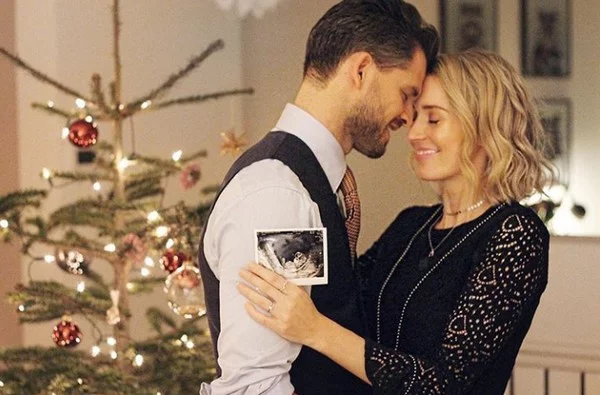
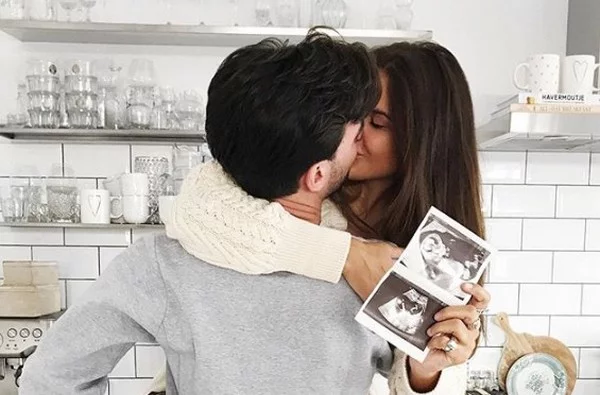
And there are many examples of online authenticity that dive even deeper into the private sphere. Social media celebrities like Sanny Verhoeven (figure 1), Kae Sutherland (figure 2), Bibi Breijman, Monica Geuze and Serena Verbon have let the world know they are pregnant via Instagram (Cosmopolitan, 2018). It is a trend to let the world know you are pregnant via social media nowadays, also among social media celebrities. With the echo many of them post next to the announcement, the social media celebrities let their audience come even closer to them. It is a sign of authenticity and a trend among social media celebrities to share the first ‘picture’ of the baby with the whole world. One can see it as an authenticity pattern.
Authenticity patterns like these are not new. Marwick, who studied the phenomenon of authenticity among fashion bloggers, saw several patterns like the one above within the content of fashion bloggers. She states that “the authentic is not something that exists apart from commercial culture, but a set of affective relations between individuals, audiences, and commodities. While the emphasis on fashion/beauty goods is somewhat specific to this community, authenticity as a boundary strategy between selfhood and neoliberal capitalism is a common feature of entrepreneurial online communities, such as selfbranders, camgirls, and lifecasters.” (Marwick, 2013: 2).
An example of what Marwick says is visible on the Instagram photo of beauty vlogger Serena Verbon (Figure 3). With this photo, Serena gives her audience a behind-the-scenes look of her life, while at the same time promoting a product. Because of the look behind-the-scenes – you see her applying the make-up on her face – a feeling of authenticity arises by the audience. At the same time, we can speak of a commercial culture, because she is branding a product. Thus, the authentic is not something that exists apart from commercial culture. And, as Marwick already pointed out, other social media celebrities also like to emphasize their authenticity.
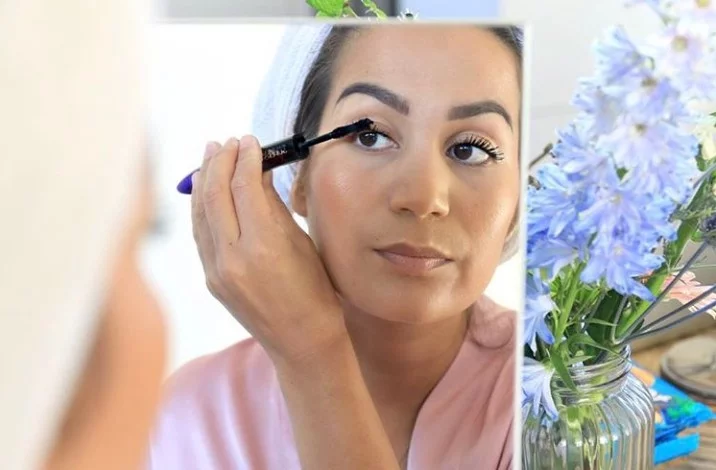
The question is, if all social media celebrities try to be ‘authentic’, why do they end up so similar to one another in terms of media image, as we saw in for example the example with the pregnancy announcements?
Back to topThe rules of the social media market
Marwick already pointed out the impact of neoliberal capitalism in the quote above. Exactly this neoliberalist influence is important for the trend of ‘authenticity’ that has arisen. Neoliberalism is “an economic philosophy that privileges the unfettered functioning of the free market” (Hou, M., 2018, April 25: personal communication).
What does this mean for social media celebrities? Well, they are more or less the ideal, neoliberalist subject the ideal entrepreneurial subject: someone “who works on him or herself, and relies on his or her hard work rather than support from others or the state” (Marwick, 2013: 7). This attitude enables the social media celebrity to function well on the free social media market of supply and demand. Within this, one can state that the celebrity is the supply that reacts to the demand.
This works like this: on social media, there is a great demand for authenticity. The audience of the social media celebrity wants to see realness and truthfulness. At the same time, this realness and truthfulness has to be very specific to be liked by the mainstream audience. Because a social media celebrity has the goal to gain as much likes, comments and followers as possible, he or she should react on the demand for authenticity as well as the demand for being mainstream. Thus, a social media celebrity should be real and truthful, but at the same time attractive for an audience that is as big as possible.
Back to topThe social media celebrity as neoliberal subject
This task proves that, however the social media celebrity is seen as a neoliberal subject and they therefore function on the free market, social media celebrities are not totally free in their choices. They might have the feeling they are free, but this freedom is an illusion.
The celebrity always has to stay between the socially constructed borders of the consumer’s demands, otherwise he or she will see this in the amount of likes, comments and followers. These social constructed borders have for example to do with the meaning consumers give to certain things: a woman with red lipstick stands for boldness, while the man that strikes with his hand through his hair is sexy. Just like these are the rules for authenticity: letting the world know you'r pregnant is nice, but at the moment you also show the first echo of your baby (or your baby belly or even a birth story), it is also authentic.
And so we are back at where we started: authenticity is highly-valued and all those social media celebrities might therefore try to be as authentic as possible. However, real authenticity can be seen as an impossible task, because it is a social construct that is always relative and context-depended. A social media celebrity might be trying to be as authentic as possible, the followers and the likes are always more important. This leads to the fact that they all compose with the social construct of authenticity that is imposed on them by the audience. So in the end, they all strike the same pose.
Back to topReferences
Cosmopolitan. (2018, January 1). Vloggers en celebs die zwanger zijn en in 2018 een kindje krijgen.
EnzoKnol. (2017, September 28). Het is voorbij. [video file]
Hou, M. (2018). Social media celebrity and the institutionalization of YouTube. Convergence, 1-20.
Jerslev, A. (2016). In time of the Microcelebrity: Celebrification and the YouTuber Zoella. International Journal of Communication (10), 5233-5251.
Marwick, A. (2013). ‘They’re really profound women, they’re entrepreneurs’: Conceptions of authenticity in fashion blogging. 7th International AIII Conference on Weblogs and Social Media (ICWSM), July 8. Cambridge, MA, USA.
Sutherland, K. (kaesutherland). (2017, October 9) [Instagram post]
The Bucket List Family. (2018, April 1). BIRTH STORY!! Welcome Baby Boy, Calihan Gee!! /// WEEK 101 : Utah. [video file]
Verbon, S. [serenaverbon]. (2017, April 13). [Instagram post]
Verhoeven, S. (sannyzoektgeluk] (2017, December 26) [Instagram post]
Back to top
