


Article
Plastic surgery and the quest for the perfect selfie in South Korea
Plastic surgeries changed the world. In this article, we are going to talk about the measures taken to make an ordinary picture on your Instagram account “on point” and what some are willing to do in order to score those 10.000+ likes.

Published date
Courses
The digital individual
Copyright
This work is licensed under a Creative Commons Attribution-NonCommercial 4.0 International License.
Read time
13 minutes

Plastic surgeries changed the world. One aspect of globalization is the normalization of homogeneous, “westernized” beauty and the speed of its spread through various media over large parts of the world. The development and the easy access of every individual to social networks has only made this process more common. Everyone can make a selfie, post it online and then wait for feedback in forms of likes and comments. But is this process really this easy?
In this article we are going to talk about the measures taken to make an ordinary picture of your Instagram account “on point” and what some are willing to do in order to score those 10000+ likes.
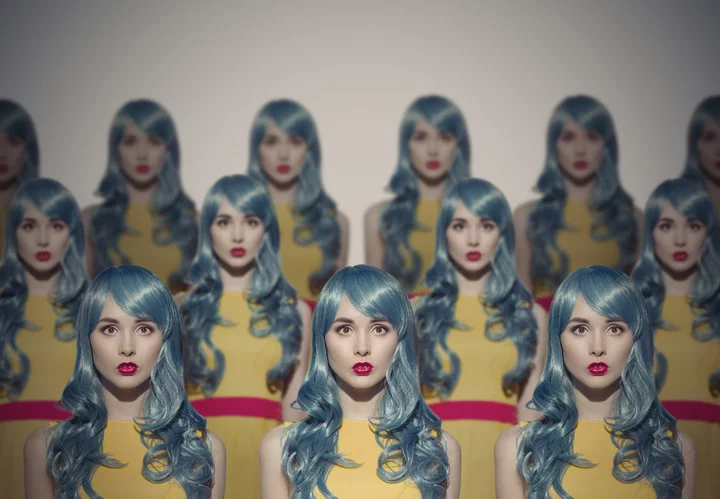
Plastic Surgery: beauty or abnormality
What does it take to become “insta famous”? In order to attract more followers, to show “...what many young people dream of having and the lifestyle they dream of living” (Marwick, 2005), essentially you need to be nice to look at. “...Sexual properties are as inseparable from class properties as the yellowness of a lemon is from its acidity” (Bourdieu, 1984). But how do you differentiate yourself as good looking?
At this point, girls mostly start looking at famous profiles, magazine covers and the most hyped celebrities. They soon discover certain “rules” of being beautiful. They might differ, but in most countries it is essential to have long hair, big eyes, plumped lips, thin waist, and all the other necessary “standard” attributes to attract others’ attention.
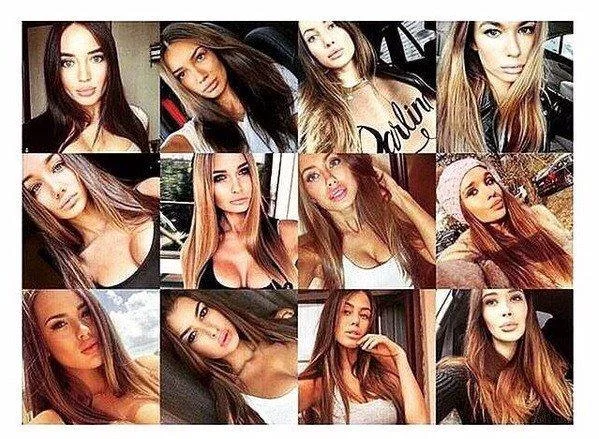
“Micro- celebrity, a self- presentation technique, in which people view themselves as a public persona to be consumed by others, use strategic intimacy to appeal to followers, and regard their audience as fans" (Marwick boyd d., 2011).. One might notice, looking at all the famous personalities and micro celebrities, that many of them have a similar kind of look. Their appearance is thus being “normalized” in terms of beauty. They are pretty in a “standard” way with “typical”, ideologized feminine features.
“The gendered femininity constitutes one of the most important aspects of female erotica,... and is a great value to its beholders” (Li, 2018).. Being good- looking is thus quite profitable for young females in social, economical and cultural ways. The great value is also added by means of social media, where they are constantly being judged, or approved by their followers.
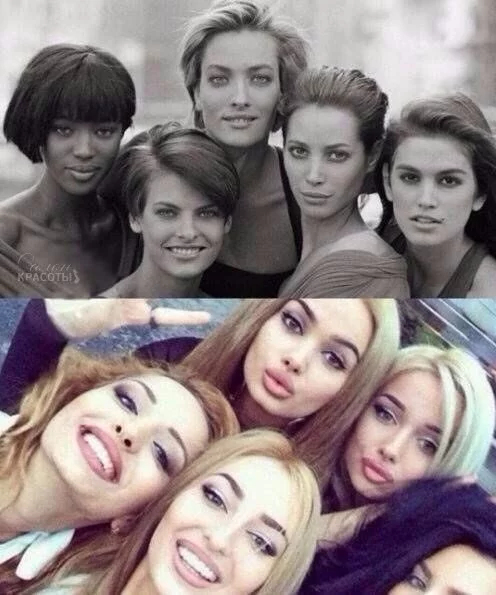
Wanna-be-(micro)celebrities, however, might end up feeling “abnormal” with their thin lips, different body types, short lashes, etc. However, they still have a chance of getting their dose of hype. Plastic surgery and different bodily manipulations might become a short way of becoming “normal” in terms of Instagrammed beauty standards. “...Women’s investments in physical attractiveness are often pathologized and perceived as in need of being rectified” (Li, 2018).
At this point, “paraphrasing Foucault (1986), we shall use “the care of the selfie”: an elaborate complex of “ludic” practices aimed at constructing and performing a specifically online (and more specifically small-screen) “image of personality” in which usually three different elements have to be carefully created and maintained:
- (a) an avatar: an online name often containing significant clues as to the particular image of personality offered in interaction;
- (b) carefully doctored pictures or video-streamed images of the selfie;
- (c) specific online interactional scripts to be observed in contacts with audiences.” (Blommaert Li, 2017).
The popularity of certain appearance changing procedures keep growing year by year. “The care of the selfie” becomes of ridiculously massive scales. Right now we are facing an unbelievable spread of plastic surgeries in different parts of the world. Some countries even become the “mekkas” for body modification pilgrimage. One of such places is, respectfully, South Korea. How did the selfie- fashion goal influence young social media users into tuning their bodies and changing themselves in one of the world’s plastic surgery capitals?
Back to topBeauty standards in South Korea
As Li (2018) puts it, in relation to Hamermesh (2011): “... [beauty] spells out a wide range of economic advantages conferable by good looks, mainly in labor markets and employment, marriage,... friendship matches” and in profitable usage of social media. Young South Korean girls thus have a whole industry developed for them, in order to get closer to the ideal look.
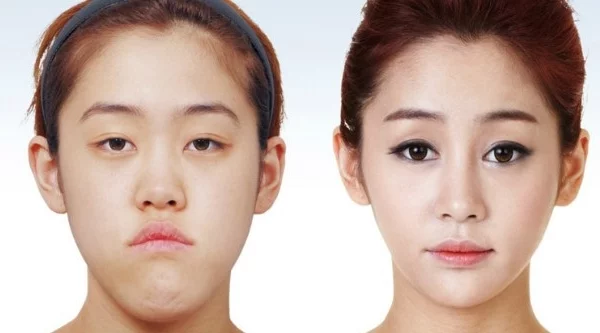
“The choice and the visual architecture of the pictures is deliberate” (Li, 2018). Jawline, rhinoplasty, cheekbone reproduction - the list of the essential selfie- “helpers” can go on and is nearly endless. Multiple filters and apps for picture retouch then only serve on the last stages to meet the perfection. It is a whole system of making an ordinary photo into an ideal, likable selfie.
In the case of South Korea “the care of the self”, as Foucault would say it, has gone too far. In a world where social media has become a part of our lives and where people want to get popular in this “attention” economy that social media has created through the Liking and Favoriting functions, South Koreans need to undergo severe bodily modifications to reach the highest results and to conform to the beauty standards of their society. The fight to look and be normal is hard for those considered "abnormal" by the South Korean norms.
Far-fetched beauty standards in Asia are far from new - foot binding in China was considered a mark of beauty and a status symbol, and surprisingly this practice lasted for centuries. Extreme South Korean standards of beauty in the 21st century got out of control because of the following factors: the massive spread and importance of Social Media and the rise of Korean Pop Music (K-Pop) which has become one of the biggest and toughest musical industries in the world.
The most recent trend of plastic surgeries in South Korea is having a more “Westernized” look. It can be traced to high mediatization of Hollywood and fashion industry, where “western- looking” girls are still the primary actors. The pressure to look good is definitely higher in a mediatized society and it aplies to both female and male South-Koreans, especially if they want to become public personas or K-pop musicians.
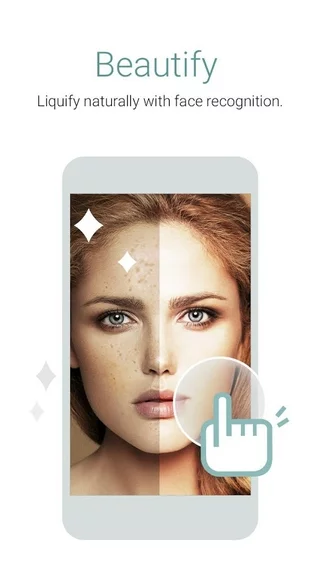
Another fascinating aspect is that in Asia, a lot of camera apps with real time modifications and also camera apps with unusual filters that wash away pimples have been created. No other camera app can beat the unusual functions that Chinese or South Korean apps got in store. One of these extraordinary camera apps is called Cymera . Cymera allows you to enhance your selfies to the maximum. It has beautifying functions that go as extreme as conturing your jaw line to obtain an exaggerated chiselled jaw or to enlarge your eyes in order to achieve the anime girl look.
Back to top
Plastic urgeries in Seoul
In fact, the problem got so widespread in Seoul local residents started protesting against popularization of unnatural beauty standards and the spread of plastic surgery commercials. The aim of such ads is to spread the message that you could look as good, all you need to do is go through the procedure.
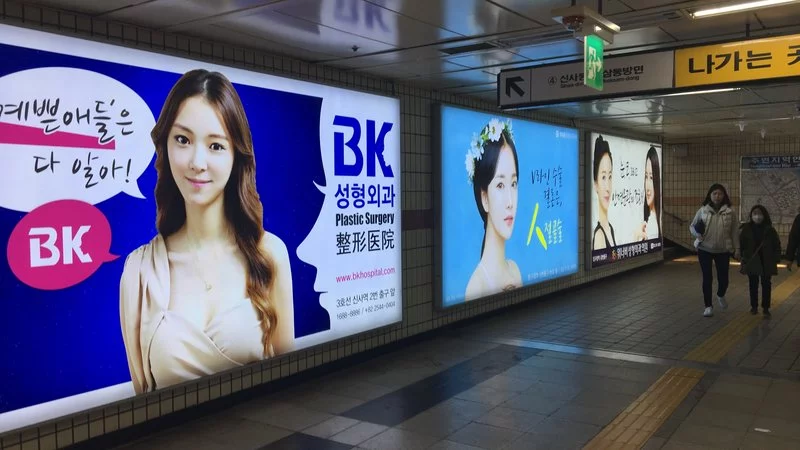
Commercials thus apply to our instincts, evoking our consumption and self modification wills, as secondary effects. Such ads make us feel wrong in our bodies, tricking society into believing, that the only way of becoming who we really are, is only after undergoing plastic surgeries.“Identities and senses of ‘being oneself’ are based on and grounded in miniscule deviations from standard formats and scripts that organize most of what this ‘being oneself’ is actually about.” (Blommaert Varis, 2015).
Plastic surgeries do take place, but mostly they are done for the society, to “fit in” better. Under such unstopping and ongoing pressure from the social media and commercials, many of South Korean young girls follow the tricks of plastic surgery normalization to remove their nonstandard, “abnormal” face and body features to pursue the career of micro- celebrity: "Constructing identity in dialogue with the Facebook protocols & algorithms makes us ‘micro-celebrities’ in managing our identity in interaction with protocols & algorithms for an imagined audience." (Maly, 2017)
According to the Gallup Korea, one out of three women between age 19 and 29 have undergone the plastic surgery procedure. The number is drastic, if we look at other countries’ statistics. Such results make South Korea the country with the most used beauty modification industry in the world.
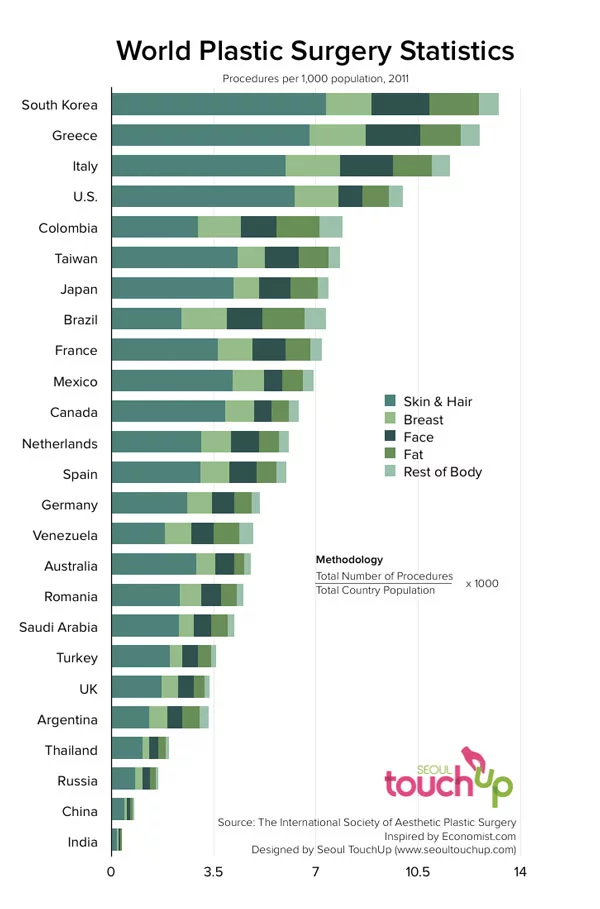
However, the plastic surgery niche in South Korea is not only a matter of culture, but also a business field worth billions of US dollars. This is why the examples, like the one with the metro station above, are not exceptions, but a spread phenomena all around the country. The self modification business does not only involve the local population, but also provokes the so-called “plastic surgery tourism”.
Agencies that promise to arrange “the best medical experience for you” attract thousands of those who are unsatisfied with their looks. They are easy to find, too- hundreds of “plastic surgery travel package” offers pop up in Google whenever you search on the topic. This also has an influence on the tourism branch within the country. The high demand on plastic surgeries provokes the openings of new medical centers and rehabilitation clinics. The active monetization of the niche attracts more young people to obtain plastic surgeon degrees and more universities and private colleges aim in opening the sufficient positions. In other words- it is profitable and this is one of the main reasons it is being so spread all around the country.
Back to top
A society where stigmas are “deleted”
Due to the increasing scale of plastic surgeries in South Korea, beauty standards also evolved accordingly. When almost everyone, as mentioned above, one out of three, undergo plastic surgery, the urge to look good can be felt by thse who still haven’t done plastic surgery.
The ideal Korean woman should be thin, as pale as possible, have big eyes, double eyelids and a very delicate jaw. This does not fit with how nature intended. A lot of South Korean women thus have to undergo jawline correction surgeries in order to achieve the delicate look. This can be spotted prominently in the K Pop industry where most of the K Pop idols have had plastic surgeries. To highlight the mass mania of jawline correction, there is a plastic surgery clinic in Seoul which used to have a tower of patients’ jaw bone shavings.
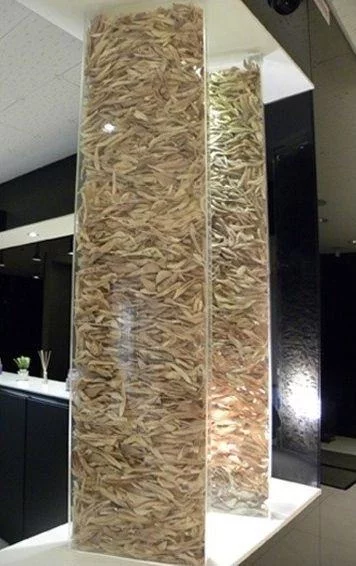
Having a big jaw, being chubby and not insanely white are now means of stigma in the South Korean society. According to the sociologist Erving Goffman, a stigmatized person is a person who is considered abnormal by the society because of physical traits, handicaps or group identity markers such as skin colour. Thus, not conforming to the beauty standards means being considered abnormal, ugly and not attractive in this society. South Korean women who do not go through body modifications and who want to stay natural become stigmatized, not worthy for attention, therefore opening up a micro-celebrity or a K Pop star career is impossible for them unless they conform to the standards.
"For some patients–those who have been discriminated against for looking a certain way, been unhappy with the way they look– plastic surgery could be a powerful tool towards self-determination." (Kyeong Jang, 2018). In Seoul, now the capital of cosmetic surgery, plastic surgery is very accessible and more than 1000 plastic surgery clinics are to be found in South Korea. Therefore, getting rid of imperfections and re-entering society after being stigmatized initially can be easily done in South Korea. Plastic surgery has become an empowering tool that gives confidence to those who consider themselves unattractive.
Back to top
Famous South Korean model shocks her fans about her plastic surgery
Lee Sung Kyung, a South Korean actress and model is now the typical Instagram celebrity, being the most famous Korean model on Instagram."Social media is driven by a specific kind of identity construction – self-mediation – and what users post, share and like effectively creates a highly curated and often abridged snapshot of how they want to be seen" (Khamis, 2016)..Her successful Instagram career is followed by 8,3 million people. It can be noticed that she posts the "perfect" shots where her hair is neat and her make-up nicely done.
Her looks are beautiful, at least according to what it is considered a standard for beauty in South Korea, however, to her fans’ shock, she did undergo plastic surgery, but is this really so shocking? This isn’t such a surprising aspect if we take into consideration the fact that if you want to be considered beautiful in South Korea, these severe methods have to be taken and therefore more and more people choose to undergo plastic surgery. Starting her career as a model and later as an actress implied beauty norms and to score high in the South Korean beauty industry it is to be expected that she had surgery.
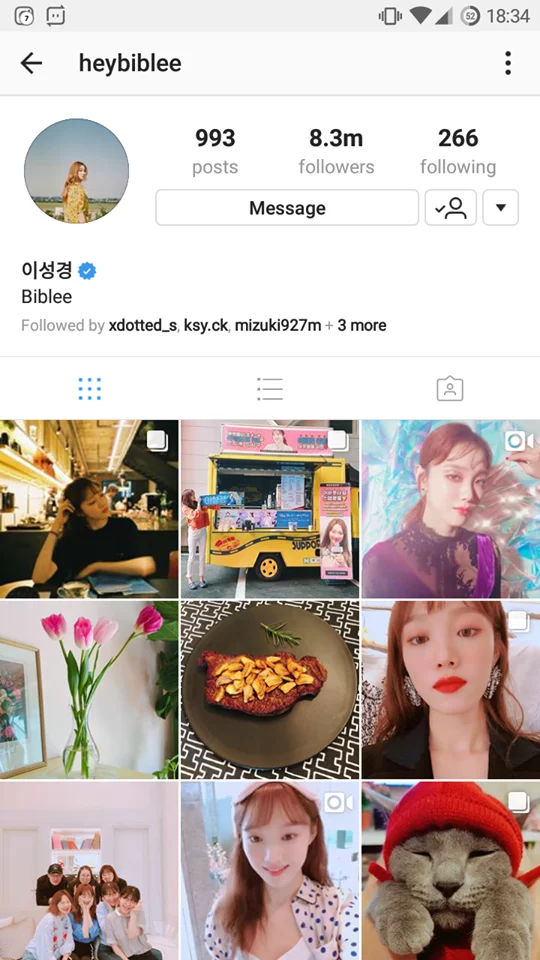
As Li (2018) puts it: "...the newly emerging digital infrastructures have transformed important parts of the fashion industry", thus being a model who is also active on social media can gain more popularity and maximize their profits. Lee Sung Kyung is not known only in South Korea, she is followed on Instagram by thousands of foreigners who love the Korean "beauty". Getting the perfect Asian girl look through body modifications and then even retouching it with camera apps are factors that allow young South Korean girls to gain popularity on social media, where being beautiful is a plus so that later on they can become models.
Back to topDigital media, plastic surgery and normality
We live in a time where the 'like economy' and the craving for attention are the factors that influence young women into doing whatever it takes to become popular and successful on social media. Being beautiful is normal, but not being beautiful is abnormal, and fortunately there are plenty of ways of adjusting yourself to become beautiful. Ranging from make-up, camera apps, to the extreme plastic surgeries that can imply even jaw correction, everyone can get rid of their stigmas and become perfect so that later they can even become models.
As we have discussed above, extreme South Korean beauty standards drove out of South Korean girls into getting a plastic surgery and this is also influenced by th need of gaining popularity online. Not only that South Korean girls want to be beautiful and to be considered normal in their society, but the goal is also to become famous and successful using their erotic capital. Seoul has become the world capital of plastic surgery and we can blame it on both the very strict beauty standards of the society and also on the social media. The competition that social media involves determines young girls to pull out the last trick from their sleeves- the easy access of getting a plastic surgery In Seoul.
Back to topReferences
Bourdieu, P. (1984). Distinction: A Social Critique of The Judgement of Taste. Cambridge: Harvard University Press.
Blommaert, J., Varis, P. (2015). Enoughness, accent and light communities: Essays on contemporary identities. Tilburg University: Tilburg Papers in Culture Studies.
H., Kyeong Jang. (2018). Why is Plastic Surgery so Popular in South Korea? [Retrieved 10th April]
Li, K (2018). Capitalization of Feminine Beauty on Chinese Social Media. Tilburg: Tilburg University.
Li, K., Blommaert, J. (2017). The care of the selfie: Ludic chronotopes of baifumei in online China. Tilburg University: Tilburg Papers in Culture Studies.
Marwick A., boyd d., (2011). I tweet honestly, I tweet passionately: Twitter users, context collapse, and the imagined audience. SAGE.
Marwick A. (2005). 'I’m a Lot More Interesting than a Friendster Profile': Identity Presentation, Authenticity and Power in Social Networking Services. SSRN
Maly I., (2017). Identity and social groups. [PowerPoint Slides].
S. Khamis., L. Ang & R.Welling (2016). Self-branding, ‘micro-celebrity’ and the rise of Social Media Influencers, Celebrity Studies
Back to top
