


Review
Lady Bird and the Celebration of Womanhood
Greta Gerwig's 2017 film Lady Bird is a celebration of femininity and its strongest point is the message it sends. The film signifies an important breakthrough in male-dominated Hollywood.

Published date
Courses
Intermediality
Copyright
This work is licensed under a Creative Commons Attribution-NonCommercial 4.0 International License.
Read time
6 minutes

Lady Bird is a 2017 comedy-drama film written and directed by Greta Gerwig. The story follows Christine McPherson, who is a senior at a Catholic high school in Sacramento, California. She gives herself the name ‘Lady Bird’ and she is said to ‘live on the wrong side of the tracks'. Lady Bird dreams of leaving her hometown and escaping to New York, where, she believes, she will find culture. In this review, I will discuss the film’s strong points and its importance.
Back to topLady Bird and the sense of immediacy
The most noticeable point in Lady Bird is the strong sense of immediacy throughout the film. Immediacy dictates that the medium itself should disappear and leave us in the presence of the thing represented (Bolter & Grusin, 2000). This is exactly what Greta Gerwig captured perfectly. Not only the way in which the film was shot, namely on a digital camera, but also the costumes, characters, and soundtrack make you feel like you are transported right back to a high school in the early 2000s.
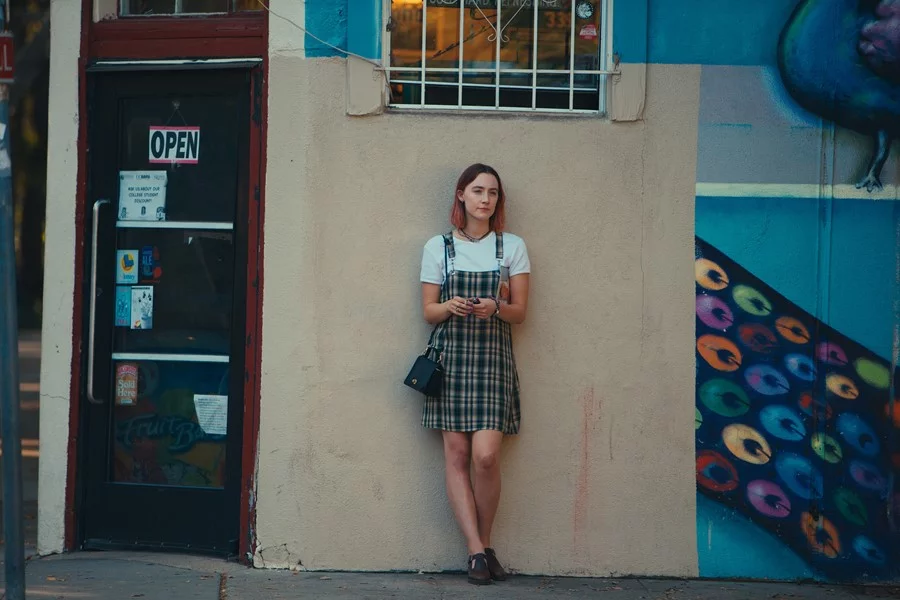
Lady Bird can be seen as a sort of ‘period piece’, namely that of the year 2002. This becomes clear by looking at the costumes alone. Although they are definitely making a comeback when it comes to fashion trends nowadays, the puka shell necklaces and secondhand Mary Jane shoes that are showcased in the film are a strong indicator of the early 2000s.
Look a bit further than what you see on the surface and you will find authentic and fleshed-out characters. Gerwig was able to create teenagers that do not feel like a romanticized, unrealistic portrayal of themselves. Contrary to popular belief, teenagers are, in fact, not perfect. Lady Bird’s characters act like teenagers actually do - kind of awkward and a bit selfish, but with their hearts (mostly) in the right place. Even if you have not set foot in a school building in years, these people will bring you right back to the awkward emotional rollercoaster that was high school.
Not only the costumes and characters emanate a strong sense of immediacy, however. Key events of the Iraq war being presented on television are also a nod to the past. Add the soundtrack, with songs from not only the early 2000s but also the late 90’s to this mix, and you will start questioning if this film was actually released in 2017 and not 2002 altogether. Even if you were born after the turn of the millennium, Lady Bird will still make you feel like you are a teenager living in 2002, wearing your own set of puka shell necklaces and Mary Jane shoes.
Back to topThe multimediality of Lady Bird
In Lady Bird, Greta Gerwig creates multimediality in a way that might not be so obvious if you do not pay close attention to it. A director of a film always creates multimediality, that is, the combination of multiple media in a project, by blending visual shots with audio tracks, soundtracks, voiceovers, sometimes even with text.
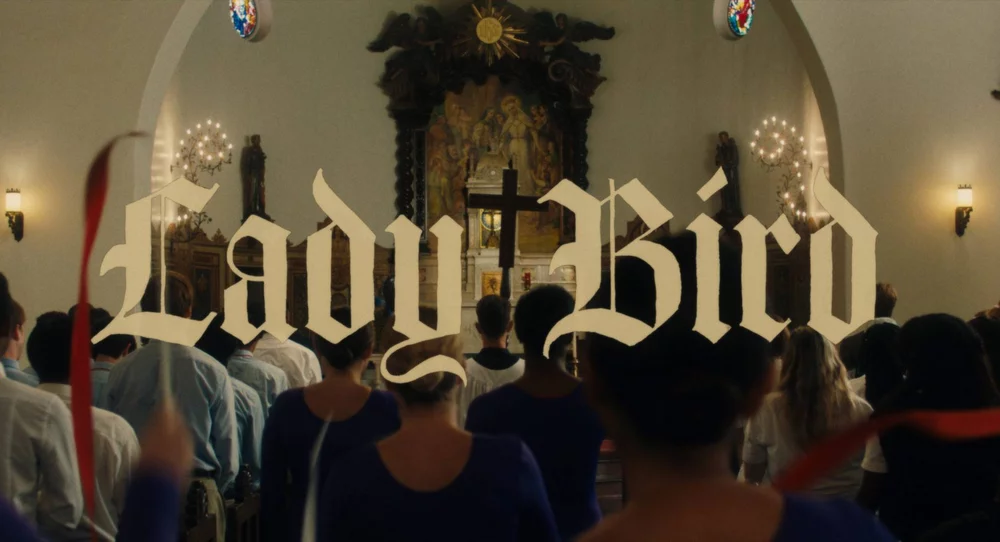
Gerwig incorporated various media into her film in a way that we are now accustomed to. The shots created by Gerwig are pleasing to look at on their own, thanks to their beautiful colors and the director’s attention to detail. When they are combined with the versatile music by Jon Brion, however, they will have you welling up sooner rather than later. On top of that, Gerwig established mutlimediality in the opening scene by combining fontography with visual shots.
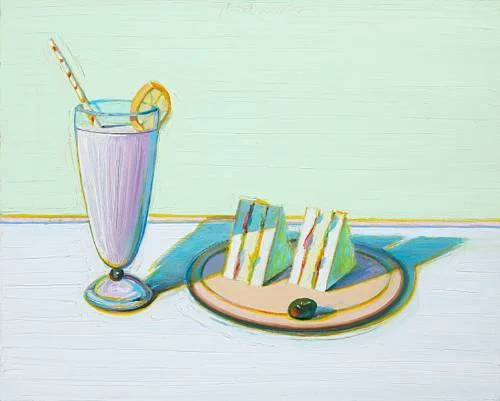
There is, however, another way in which Gerwig plays with the combination of media. The color palette of Lady Bird mostly consists of blues paired with pastels. These color combinations can be seen as a nod to the paintings by Wayne Thiebaud, who came from Northern California, just like Lady Bird. In his paintings, Thiebaud depicts everyday life in a colorful manner with many pastel colors, similar to the way in which Greta Gerwig depicts everyday life in Lady Bird (The Take, 2018).
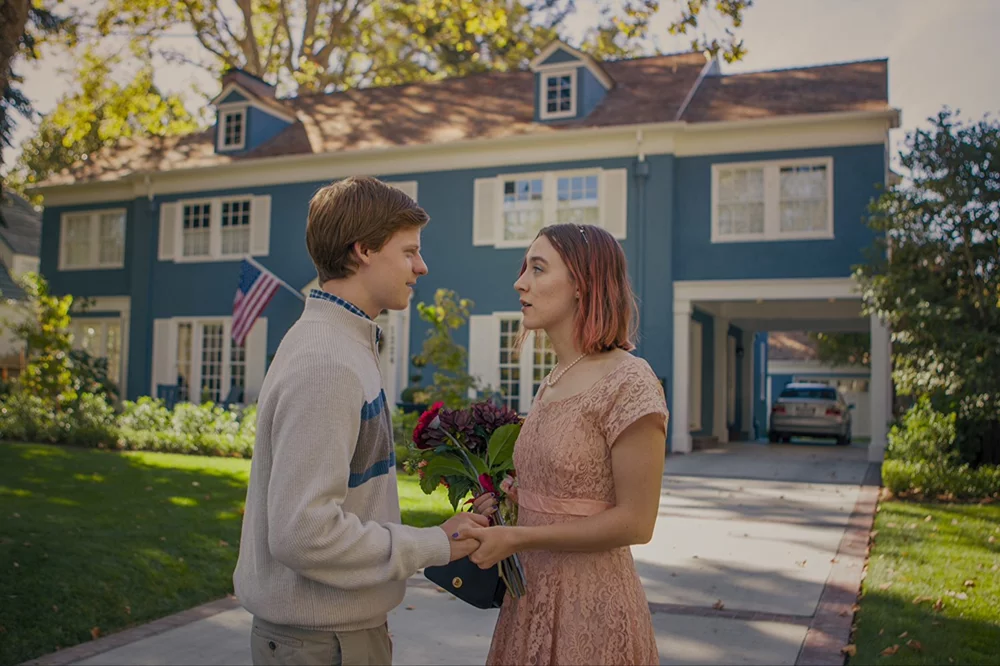
Gerwig showcases the daily life of a teenage girl living in Sacramento, but she gives these depictions of everyday practices an almost romanticized presentation by accentuating their pastel colors. This presentation of everyday life makes even the most mundane actions feel like they fell straight out of a fairytale and the world would be a much more beautiful place if Gerwig was able to make all of our everyday lives have this magical touch. By hinting at Thiebaud's paintings while establishing Lady Bird's color palette, Gerwig was, thus, able to not only combine her visual art with text and audio but also with the influence of famous paintings.
Back to topThe medium is the message
According to the often quoted and heavily disputed theory by Marshall McLuhan, ‘the medium is the message’, and Lady Bird makes this idea all the more clear. A medium is anything that affects us, anything that changes our society or the way we think about it (McLuhan, 1994). Lady Bird’s strongest point, then, is the message it sends.
Throughout the story, Lady Bird tries to find out who she really is and what she really wants. She tries to forge her own path in life, even if others might not always approve. Throughout the story, Lady Bird realizes that you are your own person and that the most important thing is to do what you think is right, even if you are not really sure what this entails. You are the one who has to live with yourself for the rest of your life and it is, thus, important that you like the person you are becoming.
Lady Bird shows young women that you are in charge of your own life and that it is okay to not have everything figured out about yourself yet. With the creation of Lady Bird, Greta Gerwig shows girls that they have their own agency, that they are in charge of their own identity and that it is okay to make mistakes.
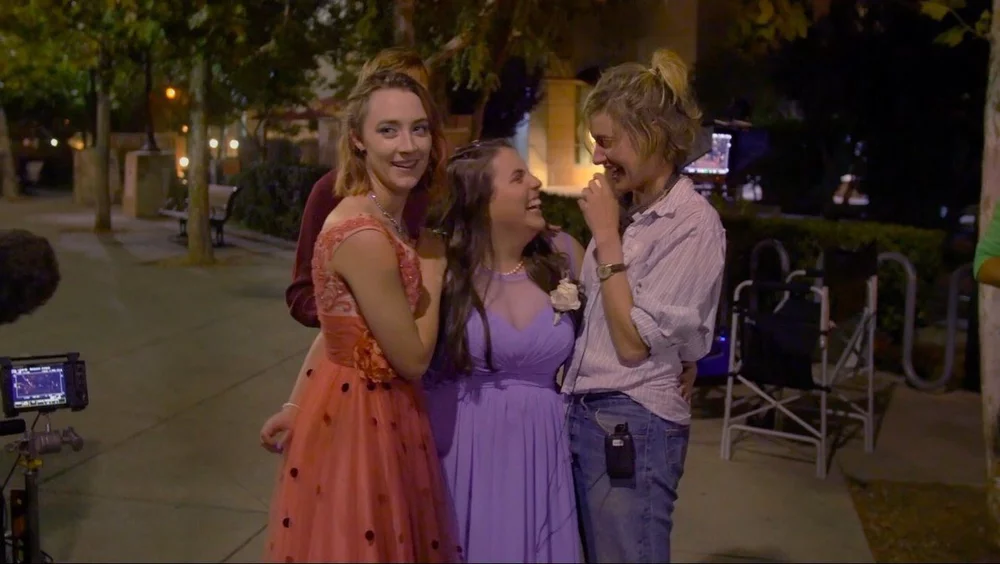
Add this positive message to the social context in which the film was released, and you have got yourself a film that will satisfy the hungry feminist in you at least for a while. Lady Bird was released in 2017 - a time in which male stories created by male producers still got the most praise and attention in Hollywood. It is refreshing to see a film that is not only written by, directed by, but also starring a woman do so well in this male-dominated film industry. This background to the film only adds to Lady Bird’s empowering message by showing women that they have their own agency and that they are able to make it big in a world that has not always been so kind to them.
Back to topThe charm of Lady Bird
Not only is Lady Bird with Gerwig's beautiful shots and colors very pleasing to the eye, but the film also signifies an important breakthrough in Hollywood and its long list of coming-of-age films. Lady Bird is part of the evolution in which more and more female directors and actresses are making it on the big screen and challenging the typically male-dominated stories in Hollywood. On the surface, the film might resemble a cliché chick flick, what with the pastel colors, the female-focused story, and the teenage awkwardness, but it goes much further than that. Rather than regarding this femininity as a weakness, however, Greta Gerwig makes it into a celebration of womanhood. And it is a good one.
Back to topResources
Bolter, J. D., & Grusin, R. (2000). Remediation: Understanding New Media. Cambridge.
McLuhan, M. (1994). Understanding Media: The Extensions of Man. Cambridge.
Tangcay, J. (2018, January 6). The Art of the Scene: Greta Gerwig Discusses The Opening of Lady Bird. Retrieved from: awardsdaily.com
The Take. (2018, January 20). What’s So Great About Lady Bird | Video Essay. Retrieved from: YouTube
Back to top
